How to Choose Wheel Balancing and Alignment Equipment?
Choosing wheel balancing and alignment equipment is a practical decision about accuracy, workflow, and the vehicles your shop serves. The U.S. Tire Manufacturers Association projected 334.2 million tire shipments in 2024, reflecting the scale of tire-related service demand. For shop owners, that makes equipment capacity and repeatable measurements important—not just purchase price.
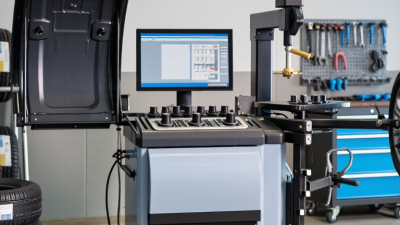
For Wheel Balancing And Alignment, start with your daily vehicle mix. A small workshop serving passenger cars may value a compact footprint and quick setup. A high-volume shop may need faster balancing cycles, robust clamps, and alignment sensors that reduce repositioning. Check the equipment’s vehicle coverage, measurement range, calibration process, and software updates. Then consider the details technicians notice on the floor: clear displays, accessible service points, and reliable performance when rims are dirty or uneven.
A sound buying rule is simple: match the machine to the work. I can’t verify a named expert’s exact quotation from the material provided, so I won’t invent one. Treat that restraint as part of the buying process, too. Ask suppliers for documented accuracy specifications, service-response times, and a live demonstration using vehicles similar to yours. Compare the numbers. Watch the workflow. A polished demo is not proof of long-term reliability.
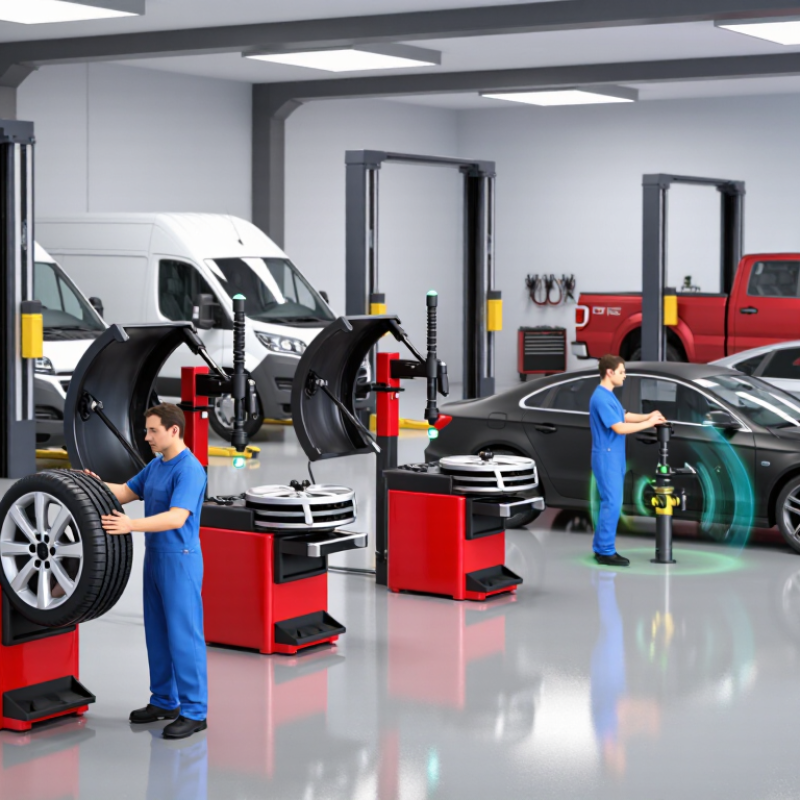
Define Vehicle and Rim Coverage, Including Common 13–24 in Passenger-Wheel Sizes
Choose balancing and alignment equipment around the vehicles and wheels your shop actually services.
A useful starting range is 13–24-inch passenger rims, but diameter alone does not define coverage. Check the machine’s clamp range, wheel width limits, shaft capacity, and adapter options. A 20-inch rim may fit while a wide wheel or unusual center bore does not.
Small details matter.
The mix of vehicles also matters. S&P Global Mobility reported that the average age of U.S. light vehicles reached 12.6 years in 2024. That aging fleet means shops may see older, smaller rims beside newer, larger ones. Confirm coverage against local registration data and your own repair orders. Include steel wheels, alloy wheels, low-profile tires, and different mounting styles in practical tests.
A specification sheet can look reassuring. A real wheel may disagree.
Before purchasing, test representative wheels from your service area, including a narrow 13-inch wheel and a wide 24-inch assembly if those jobs are common. Check whether the balancer’s measuring arm reads rim dimensions accurately and whether the alignment system accommodates your lift and vehicle track widths. Ask how calibration is verified and how often service is needed.
I would not assume every advertised adapter comes standard; confirm the included kit in writing.
Check Balancer Capacity and 1 g (0.035 oz) Imbalance-Reading Resolution
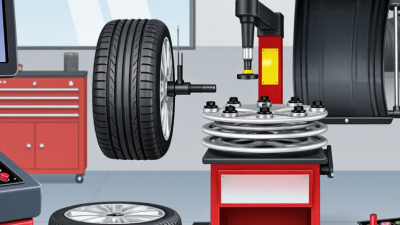
When choosing wheel balancing equipment, match its capacity to the heaviest wheel-and-tire assembly your shop handles. Check maximum assembly weight, rim diameter, and wheel width—not just the vehicle category on the machine’s specification sheet. A large SUV wheel may exceed a compact unit’s limits. Leave some capacity headroom for heavier future work.
A 1 g display increment equals about 0.035 oz, making small correction steps easier to select. But resolution is not the same as measurement accuracy. ISO 21940-11:2016 describes residual-unbalance limits in relation to rotor mass, balance quality grade, and operating speed; it does not certify a tire balancer’s accuracy. Ask suppliers for repeatability or calibration data, then test the same wheel several times. If readings drift, a fine display alone will not help. Small differences matter.
Tips: Balance a clean wheel, center it with the correct cone or adapter, and confirm the machine’s calibration. Record repeated readings. A 1 g display is useful, but setup still matters. That detail is easy to overlook.
Compare Alignment Accuracy: 0.01° Equals 0.6 Arcminutes
When comparing wheel-balancing and alignment equipment, do not confuse a 0.01° display increment with 0.01° measurement accuracy. NIST Special Publication 811 defines 60 arcminutes in one degree, making 0.01° equal to 0.6 arcminutes. That is a fine angular step. Over a one-metre reference length, it corresponds to about 0.175 mm of lateral shift. A screen can still mislead. Check stated accuracy, repeatability, measurement range, and calibration interval. Confirm that specifications apply separately to toe, camber, and caster. SAE J670 provides consistent vehicle-angle terminology, but it does not certify any machine’s performance.
In a busy workshop, a slightly dirty target or an uneven floor can undermine impressive-looking readings. Ask for calibration records and measurement uncertainty, not just the smallest number shown on screen. ISO/IEC 17025:2017 sets competence requirements for testing and calibration laboratories; a certificate from a capable lab helps support confidence in the measurement chain. Check it in practice. Take repeated readings on the same vehicle, then compare results after repositioning the targets. If values drift, investigate setup and calibration before blaming the vehicle. A 0.01° display may be useful, but only when the whole measurement system can support it. That distinction matters.
Verify Lift, Clamp, Sensor, and Calibration Compatibility
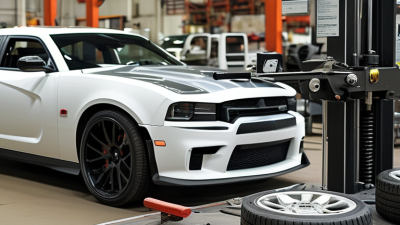
Choosing wheel balancing and alignment equipment starts with the vehicles entering your shop. S&P Global Mobility reported that the average age of U.S. light vehicles reached 12.6 years in 2024. That age range means equipment must handle varied wheel sizes, rim profiles, and vehicle dimensions. Check the alignment lift’s capacity, runway width, and wheelbase range against your service mix. Confirm that turnplates and rear slip plates fit the lift correctly. A lift that raises a vehicle safely but leaves its wheels outside the sensor range is not a practical match.
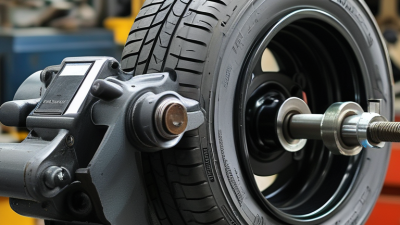
Next, verify clamp and sensor compatibility. Clamps should grip the rims you service without contacting delicate finishes or obstructing weights. Confirm the balancer supports your common wheel diameters and uses a clamping method your technicians can repeat consistently. Alignment sensors, targets, and software must work together; check vehicle coverage and required adapters before buying. Ask how calibration is performed, what reference surfaces it requires, and how often the process should be checked. I have seen a tidy specification sheet hide an awkward adapter gap. Small details matter.
Tips: Measure your lift and wheels in the bay, not from memory. Test representative vehicles, including one with a large wheel and one with a narrow rim. Record the sensor setup and calibration steps. A checklist helps, but it can still miss a real-world fit issue.
How to Choose Wheel Balancing and Alignment Equipment
Verify lift, clamp, sensor, and calibration compatibility before purchasing.
Checklist item counts, not product ratings: check lift capacity, runway and turnplate fit; clamp type, rim range and clearance; sensor technology, targets or adapters, and vehicle coverage; and calibration procedure and required accessories. Confirm each detail with the equipment specifications and your workshop setup.
Estimate Throughput Using Cycle Time and Expected Daily Wheel-Service Volume
Estimate equipment capacity from real cycle times, not advertised speed. Time complete jobs on several typical vehicles, including wheel mounting, data entry, clamping, measurement, correction, and final verification. Record balancing and alignment separately, then measure the combined workflow if customers commonly request both. A stopwatch helps. So does an honest log.
For example, if a full wheel-service job averages 12 minutes, seven productive hours allow 35 theoretical jobs per day. That assumes no interruptions, which is rarely true. Allow time for vehicle movement, weight changes, difficult adjustments, and occasional recalibration. If your shop expects 24 jobs daily, equipment with comfortable capacity above that target leaves room for uneven days. Track actual results for a few weeks; your first estimate may be wrong.
Check the busiest hours, not just the daily average. A machine that can handle the volume on paper may still create a queue when several vehicles arrive together. Consider bay space, operator experience, and whether one technician must move between balancing and alignment stations. Measure cycle time again after workflow changes. Small delays add up, and not every slow job means the equipment is inadequate.