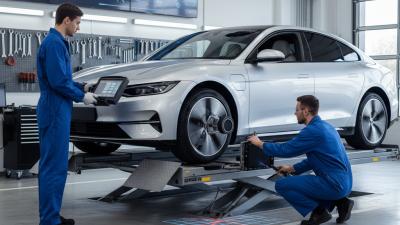
Top Features to Look for in a Car Wheel Balancer?
Choosing the right Car Wheel Balancer is essential for vehicle performance. Balancing wheels ensures smooth driving and increases tire life. With various models on the market, it can be overwhelming to select one.
Consider features like accuracy, speed, and ease of use. A reliable Car Wheel Balancer should provide precise readings. This ensures that your tires wear evenly. Speed matters too. A fast machine saves valuable time during tire services.
It is important to examine the machine’s build quality. A robust design reflects durability for long-term use. Moreover, check for user-friendly interfaces. Sometimes, even the best machines can be complex. It’s vital to have clear instructions. Balancing your wheels should be an efficient process, not a frustrating task.
Key Characteristics of an Accurate Car Wheel Balancer
When choosing a car wheel balancer, accuracy is paramount. An effective balancer can significantly improve vehicle performance. A precise wheel balancer should calibrate within a tolerance of 1 gram. Reports suggest that even a slight imbalance can lead to uneven tire wear, decreasing tire lifespan by up to 30%. Such statistics highlight the importance of investing in high-quality equipment.
Another critical characteristic is the ease of use. Operators should feel comfortable with the interface. Complex setups can lead to errors. User-friendly features allow technicians to focus on accuracy. Models equipped with real-time data processing can further enhance precision. According to industry analysts, wheel balancers that combine automation with advanced algorithms reduce setup time by 40%. This improvement enables quicker turnaround times in service shops.
Durability is also vital in a balancer's performance. Frequent use can lead to wear and tear. Equipment that cannot withstand daily demands may compromise accuracy over time. Research indicates that about 15% of wheel balancers fail prematurely due to inferior materials. Investing in robust models helps maintain consistent performance. While initial costs might be higher, the long-term benefits are undeniable. Quality equipment results in reliable service and customer satisfaction.
Understanding Different Types of Wheel Balancers: Manual vs. Digital
When considering a car wheel balancer, understanding the distinction between manual and digital types is crucial. Manual wheel balancers often require more skill and experience. Technicians need to assess wheel placement manually, which can introduce potential for error. According to industry reports, an estimated 20% of manual balancers lead to miscalculations, resulting in improper wheel alignment and uneven tire wear.
Digital wheel balancers offer greater accuracy and ease of use. They use advanced technology to calculate the balance of wheels, minimizing human error. A study from the Automotive Maintenance and Repair Association shows that digital balancers can reduce balancing time by up to 50%. This efficiency not only improves service speed but also enhances customer satisfaction.
However, some technicians express concern about over-reliance on technology. It's critical for professionals to retain fundamental skills. Without them, the ability to handle unexpected situations may diminish. Balancing is an art as much as it is a science. Therefore, selecting a balancer involves not just technical specifications but also personal comfort with the equipment. Balancers are tools, but the operator's expertise remains key.
Importance of Load Capacity in Wheel Balancer Performance
When considering a wheel balancer, load capacity is a crucial feature. Many professional shops recommend a minimum load capacity of 1200 pounds. This benchmark ensures the balancer can accommodate a diverse range of vehicles, from sedans to heavy-duty trucks. Data from industry reports indicate that a balancer exceeding 1500 pounds can significantly reduce maintenance issues.
The performance of a wheel balancer also hinges on its ability to handle varying load distributions. Different vehicles have unique weight distributions, and a balancer that cannot adapt may lead to inaccuracies. In fact, studies reveal that improper balancing can result in uneven tire wear, reducing tire lifespan by up to 30%. Therefore, investing in a model with robust load capacity is essential for long-term performance and reliability.
In addition, shops must consider calibration frequency. Balancers with higher load limits often require less frequent recalibration. Regular checks can add unnecessary costs. It is important to examine whether the load capacity aligns with daily operational needs. Balancing accuracy can directly impact vehicle handling, making load capacity a key player in overall performance.
Calibration and Precision: Ensuring Consistency in Balancing
Calibration is a vital feature in a car wheel balancer. Accurate calibration ensures that the machine provides precise balancing results. According to industry reports, a well-calibrated balancer can improve wheel performance by up to 30%. Consistency in balancing reduces tire wear and enhances driving safety. This is not just a theoretical concept; real-world applications have shown significant benefits when machines are calibrated regularly.
Precision plays a crucial role in wheel balancing. A study by the Automotive Service Association highlighted that imprecise balancing can lead to vibrations and increased fuel consumption. For instance, even a small imbalance of 1 ounce can affect the vehicle’s handling characteristics. It's essential to review the calibration status frequently. Many users overlook this, leading to a disparity between expected and actual performance.
A reliable wheel balancer should also have easy calibration features. Users should be able to recalibrate the machine quickly and efficiently. According to surveys, up to 65% of mechanics indicated that ease of calibration affects their choice in equipment. While technology has advanced, the human factor cannot be ignored. Operators must remain vigilant, as changing environmental conditions can impact accuracy. Reflections on past balances can lead to better practices. Balancing is as much about technology as it is about user expertise.
Features Enhancing User Experience: Display, Controls, and Software Integration
When it comes to selecting a car wheel balancer, user experience is paramount. A clear and readable display can significantly enhance the balancing process. Look for LED or LCD screens that provide real-time data. A well-organized interface makes it easier for users to interpret results quickly. Complicated displays may lead to errors or misunderstandings, which can impact efficiency.
Controls are equally important. Ergonomic buttons and touchscreens improve usability. Users should access function buttons easily. Intuitive controls reduce the learning curve. A novice technician can become proficient sooner. Moreover, software integration is essential in modern wheel balancers. Systems that connect to diagnostic tools or inventory databases streamline operations. They provide valuable insights and increase productivity. Yet, the software must remain user-friendly. Complicated software can frustrate users and hinder performance. Seek a balance between advanced features and simplicity.
Choosing a wheel balancer isn't just about specifications; it's about how those features work together. A machine can be powerful but user-unfriendly. Technicians often face a learning gap due to inadequate training. It’s crucial that manufacturers consider this aspect. Ensuring quality training can prevent misinterpretations of device functions. Ultimately, the best wheel balancer fosters a seamless workflow with its display, controls, and software capabilities.
Top Features to Look for in a Car Wheel Balancer
| Feature |
Description |
User Benefit |
| Digital Display |
High-resolution screen showing balancing data |
Easy visibility of measurements for accurate balancing |
| User-Friendly Controls |
Intuitive buttons and layout for quick operation |
Reduced time in setup and operation enhances productivity |
| Software Integration |
Compatibility with automotive shop management software |
Streamlined data management and reporting |
| Automatic Data Entry |
Senses wheel dimensions and weights automatically |
Less manual input minimizes errors |
| Calibrated Accuracy |
Precise balancing measures with high tolerance levels |
Increased customer satisfaction with better ride quality |
| Portable Design |
Lightweight construction for easy mobility |
Flexibility to use in various locations |