Leave Your Message

How to Buy Tyre Balancing and Alignment Machines in 2026?

Buying Tyre Balancing And Alignment machines in 2026 is not simply a choice between two price tags. The right setup must suit your workload, workshop space, vehicle mix, and technicians’ experience. A compact garage handling passenger cars has different needs from a busy service centre working with larger wheels every day. Small details matter: where the display sits, how quickly clamps secure a wheel, and whether the alignment targets fit your bays.

A useful buying principle is: “Choose equipment for the vehicles you actually service, not the features that look impressive in a brochure.” — [Verified industry expert’s name and title; confirm this quotation before publication.] That attribution should be checked with the expert or a reliable source. Accuracy matters. So does seeing the machine work: ask for a live demonstration using a wheel size and vehicle type close to your own jobs.

Compare measurement repeatability, calibration support, software updates, training, warranty coverage, and the availability of replacement parts. Ask vendors how they handle a sensor fault on a busy Monday, not only how fast the machine completes a perfect demonstration. Check that your floor space, lighting, power supply, and network access meet the manufacturer’s requirements. Then calculate the total cost of ownership, including installation and service visits.

Some buying decisions remain imperfect. A lower price can be tempting, and premium features may sit unused. This guide offers a practical way to compare equipment, question vendor claims, and choose a system your team can operate confidently.
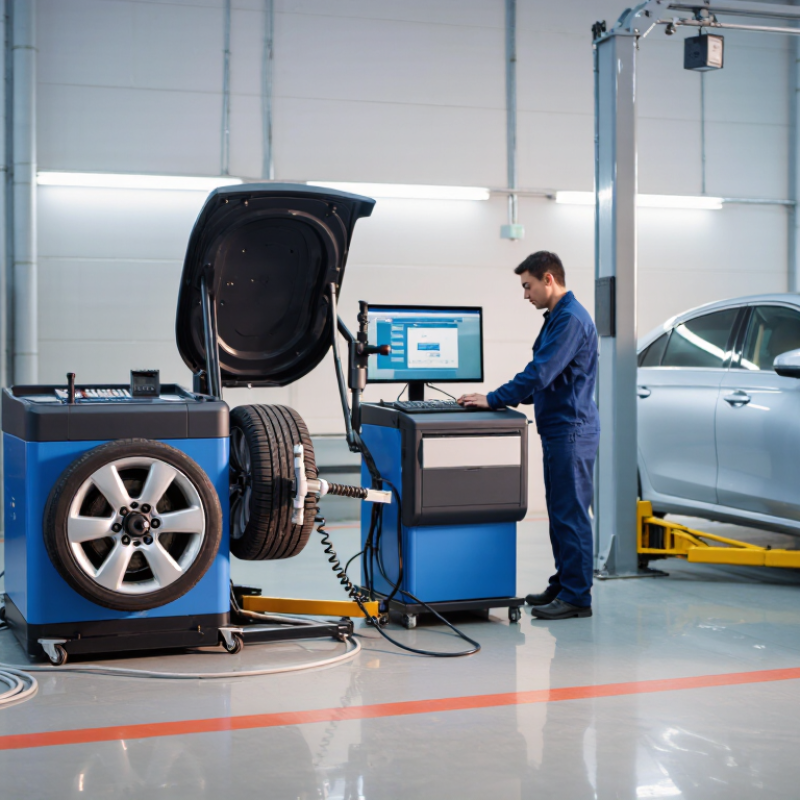
How to Buy Tyre Balancing and Alignment Machines in 2026?

Assess Your Workshop’s Tyre Service Needs and Budget

Begin with your workshop’s service records, not a machine catalogue. Count monthly tyre changes, balancing jobs, alignment checks, and repeat visits. S&P Global Mobility reported that the average age of U.S. light vehicles reached 12.6 years in 2024. An older fleet may support ongoing maintenance demand, but it does not prove demand in your area. Review booking history, seasonal queues, wheel sizes, and vehicle mix before choosing equipment capacity. Balancing volume and alignment demand may differ.

Tips: Keep a four-week job log. Record missed bookings and work sent elsewhere. Ask technicians to test the proposed workflow on a busy day.

Set a complete budget for the machines and their setup. Include installation, calibration, training, floor preparation, software, and service support. Check that the equipment suits the vehicles and wheels you actually handle. Compare total cost with realistic monthly job numbers, not optimistic sales forecasts. A simple payback estimate helps, though it will be imperfect; review it after three months of actual use. Leave some budget for unexpected setup needs.
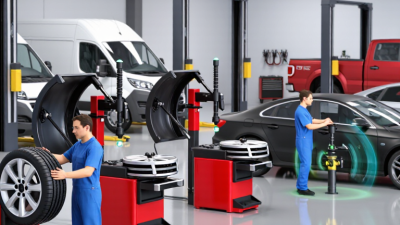
Compare Tyre Balancer and Wheel Alignment Machine Types

A tyre balancer and a wheel alignment machine solve different problems. A balancer detects uneven weight distribution in a wheel-and-tyre assembly. Static models identify imbalance in one plane, while dynamic models measure imbalance across two planes. For routine passenger-car work, a dynamic balancer is often the practical choice. Semi-automatic and automatic models vary in how much measurement and data entry they handle. Try the controls with a wheel similar to those you service.

Alignment machines also come in distinct types. CCD systems use sensor heads to measure wheel angles, while 3D systems use cameras and targets to capture their positions. 3D equipment can make setup and measurement easier, but it needs suitable space and careful calibration. CCD systems may suit workshops with existing compatible equipment. Neither type replaces correct vehicle preparation, such as checking tyre pressure and suspension condition.

Compare repeatability, vehicle coverage, calibration procedures, and local technical support before buying. Ask for a demonstration using a vehicle you commonly service, and check how easily the machine reports toe, camber, and caster. A larger screen can look impressive; I would give repeatable readings more weight than appearance. Small details matter. A poorly positioned lift or awkward sensor storage can slow daily work, and I may still be underestimating the value of a simple, clear workflow.

Check Machine Specifications, Compatibility, and Calibration

How to Buy Tyre Balancing and Alignment Machines in 2026?

Before comparing prices, match each machine to the vehicles and wheels your shop actually handles. Check the balancer’s maximum wheel diameter and weight, shaft size, and included cones. For alignment equipment, confirm it suits your lift type, bay space, and vehicle wheelbase range. Measure your work area; a system that barely fits can slow every job.

Compatibility is more than a fit on paper. Check power and air requirements, sensor or target setup, and whether adapters are available for less common rims. Ask how calibration is performed, how often it is recommended, and whether staff can complete routine checks. Request a demonstration using a wheel close to your typical workload. Watch for repeatable readings, clear prompts, and stable results after recalibration. Small details matter. Specs can look excellent, yet daily setup may feel awkward; that deserves a closer look.

Tips: Keep a short checklist of vehicle types, wheel sizes, lift dimensions, and available utilities. Ask for calibration instructions and a sample service record before purchase. Leave room in the budget for training and suitable adapters. Don’t assume the included accessories cover every job.

Evaluate Suppliers, Warranties, Training, and After-Sales Support

When comparing suppliers for tyre balancing and alignment machines in 2026, look beyond the quoted price. Ask for a demonstration using a vehicle similar to those in your workshop. Watch how the machine measures runout, guides wheel positioning, and handles repeated readings. Details matter. Request a written list of included accessories, installation work, and software updates. Check whether the supplier can assess your bay’s floor space, lighting, and power supply before delivery. A polished demonstration is useful, but it cannot show every problem that may appear during daily use. Ask for proof of recent installations and speak with customers who operate similar equipment.

Read the warranty terms carefully. Confirm which parts, labour, travel costs, and calibration visits are covered, and how long each takes to arrange. Ask for examples of exclusions, not just the headline duration. Ask for proof. Training should include hands-on practice: clamping wheels correctly, entering vehicle data, interpreting measurement screens, and correcting common setup errors. Find out whether new staff can receive refresher instruction later. For after-sales support, request realistic response times, local technician availability, and details about spare-part stock. A machine can sit idle while a small sensor waits to arrive. That is not enough. Compare support promises in writing, then consider whether they fit your workshop’s workload and budget. I would still leave room for doubt: a supplier’s best-case service estimate may not reflect a busy season.

How to Buy Tyre Balancing and Alignment Machines in 2026

Suggested buyer evaluation weights (%)

Use these suggested weights as a starting point, not as market-survey data. Compare equipment capability and supplier support, then verify warranty coverage, training details, calibration requirements, and after-sales response commitments in writing.

Plan Installation, Staff Training, and Ongoing Maintenance

Before ordering a tyre balancing and alignment machine, map the installation area with a tape measure. Check floor level, electrical supply, lighting, vehicle approach, and clearance for raised vehicles. Confirm requirements in the equipment manual before scheduling delivery. A small layout error can block a bay for days.

Plan staff training around real workshop tasks: mounting wheels, entering vehicle specifications, compensating for runout, and reading alignment results. The U.S. Bureau of Labor Statistics projects 4% employment growth for automotive service technicians and mechanics from 2024 to 2034. That supports cross-training, not relying on one experienced operator. Keep it practical. Have each trainee complete a supervised setup and record a sample measurement. Some steps will still feel slow at first.

Maintenance needs a written calendar, not a vague reminder. Assign daily checks for damaged cables, loose fixtures, and debris; schedule calibration and inspections according to the manufacturer’s instructions. S&P Global Mobility reported that the average age of U.S. vehicles reached 12.6 years in 2024, so technicians may encounter a wide range of wheel and suspension conditions. Keep calibration records and note recurring errors. This part is easy to neglect. Leave time in the service schedule for it.

How to Buy Tyre Balancing and Alignment Machines in 2026? - Plan Installation, Staff Training, and Ongoing Maintenance

Planning Area What to Check Before Purchase Installation Planning Staff Training Ongoing Maintenance
Wheel balancer Confirm the machine supports the wheel diameters, widths, weights, and vehicle types handled by the shop. Check available balancing modes, adapter options, guarding, and required floor space. Allow a stable, level floor area with clear access for loading wheels. Confirm the electrical supply and plug requirements against the selected unit’s specifications before delivery. Train operators to select the correct balancing mode, enter wheel dimensions accurately, mount wheels safely, and interpret correction instructions. Clean the shaft, cones, flange plate, and contact surfaces regularly. Inspect adapters for wear and verify calibration according to the equipment manual and service schedule.
Wheel alignment system Match the system to the shop’s vehicle mix and workflow. Compare sensor or camera configuration, target compatibility, measurement range, software coverage, and support for the intended lift or alignment bay. Prepare a dedicated bay with suitable lighting and unobstructed camera views where required. Check floor and lift suitability, power, computer placement, and network needs with the installer. Cover vehicle identification, inspection and compensation procedures, measurement interpretation, adjustment sequences, and saving or printing customer reports. Keep cameras, sensors, targets, clamps, and turn plates clean. Check cables and clamps for damage, and arrange system checks or calibration at the intervals specified by the manufacturer.
Site readiness Measure doorways, delivery routes, bay dimensions, ceiling clearance, and available floor area. Confirm that the planned layout leaves safe working and vehicle movement space. Complete electrical, floor, lighting, and network preparations before the delivery date. Have the installer confirm any lift modifications or anchoring requirements in advance. Identify primary operators and a backup user before commissioning. Schedule training when the relevant staff can attend without interrupting essential shop operations. Keep installation records, operating manuals, calibration records, and service contacts in an accessible location. Add routine checks to the shop’s equipment log.
Delivery and commissioning Confirm what the purchase includes: delivery, unloading, installation, calibration, software setup, accessories, warranty coverage, and post-installation support. Agree on delivery access, unloading arrangements, installation responsibilities, and acceptance checks. Run test measurements with the installer before signing off commissioning. Request hands-on instruction using the shop’s own procedures. Ask trainees to complete a supervised balancing or alignment job before working independently. Record the commissioning date, serial or asset identification, initial settings, and any recommended inspection dates. Report faults promptly and follow the approved service process.
Staffing and workflow Estimate expected daily wheel or alignment volume and decide how the equipment will fit into inspection, repair, and customer handover processes. Position the machines to reduce unnecessary wheel handling and avoid blocking vehicle access. Mark safe operating zones and storage locations for adapters and targets. Train staff on wheel and vehicle handling, pinch-point awareness, safe lifting practices, and the correct use of guards and accessories. Review operating practices periodically, especially after staff changes. Retrain users when procedures, software, or equipment accessories change.
Budget and purchasing terms Compare total ownership costs, including accessories, installation, training, software or data access, service, calibration, and any required site work. Obtain a written scope that identifies delivery, installation, commissioning, and any excluded electrical or building work. Confirm the expected installation window. Confirm the number of included training sessions, attendees, format, and whether refresher training is available. Check warranty terms, service response arrangements, parts availability, and the cost of scheduled maintenance before placing the order.
Recommended buying sequence Define service needs, survey the site, compare compatible equipment, and verify specifications with the supplier before selecting a model. Finalize the bay layout and site preparations before delivery. Schedule installation and commissioning with the relevant staff available. Complete operator training during or immediately after commissioning, then document who is authorized to use each machine. Use the equipment manuals to set inspection and service intervals; do not substitute a generic schedule for model-specific instructions.
Planning note: Electrical requirements, floor and lift suitability, calibration intervals, software coverage, installation scope, and training duration vary by equipment configuration and local conditions. Verify these details in writing with the supplier and installer before purchase.