Leave Your Message

Best Car Balancing Machine Manufacturer in China?

Choosing the Best Car Balancing Machine Manufacturer in China takes more than comparing prices or polished factory photos. A balancing machine must deliver repeatable readings, handle common wheel sizes, and remain practical for technicians during a busy shift. A useful test is straightforward: balance the same wheel several times and check whether the results stay consistent. Watch the operator mount the wheel, select the correct settings, and interpret the display. Small details matter.

Quality-management expert W. Edwards Deming famously said, “In God we trust; all others must bring data.” His principle applies well here: ask manufacturers for documented accuracy, calibration procedures, and test results—not just broad performance claims. Also check the spindle and cone options, adapter availability, user interface, warranty terms, and access to spare parts. These details affect whether a machine fits your workshop after installation, not merely during a product demonstration.

A careful supplier review should include a live demonstration, a sample inspection report, and clear answers about training and after-sales support. Ask how the machine behaves with different wheel assemblies and what technicians should do when readings fluctuate. Not every factory excels in every area. A lower price may still be attractive, but it should not replace evidence of repeatability or dependable service. This guide compares practical selection criteria for buyers evaluating Chinese manufacturers, while recognizing that specifications alone cannot predict every workshop’s experience. A thoughtful choice starts with questions—and sometimes a second look.
Best Car Balancing Machine Manufacturer in China?

What Is a Car Balancing Machine?

Best Car Balancing Machine Manufacturer in China?

What Is a Car Balancing Machine?

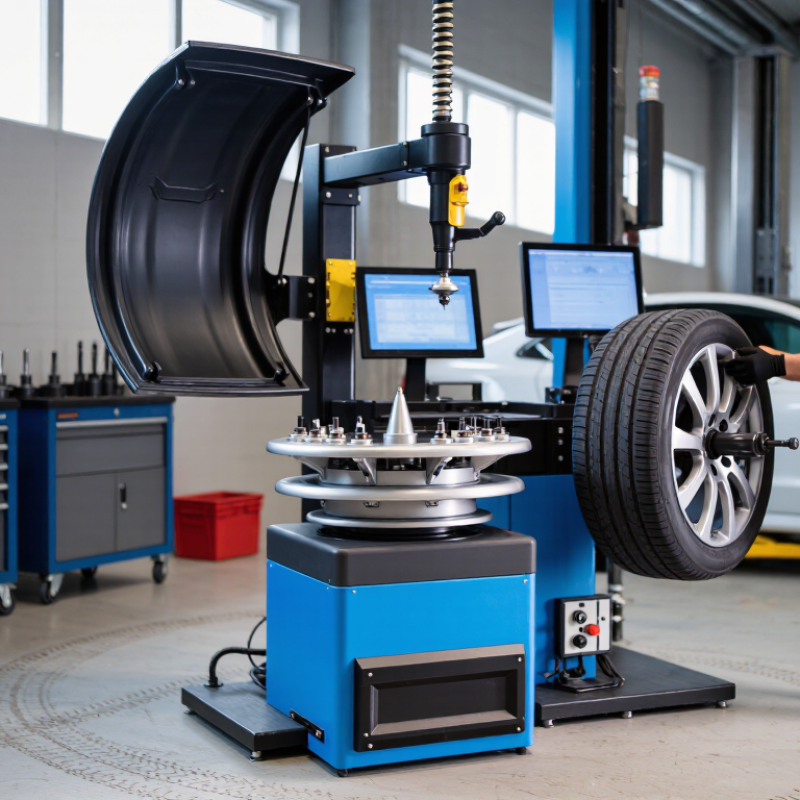
A car balancing machine, often called a wheel balancer, checks whether a wheel-and-tire assembly rotates evenly. The operator mounts the assembly on a spindle and enters its dimensions. During a controlled spin, sensors detect vibration caused by uneven mass. The display shows where correction is needed and how much weight to add. Even a small imbalance can cause steering-wheel shake, uneven tire wear, or extra strain at certain speeds.

A balancer does not repair a damaged tire, bent rim, or incorrect wheel alignment. It identifies mass imbalance; a technician must inspect the cause and select the right correction. Some machines provide static and dynamic readings, with dynamic balancing checking the wheel’s inner and outer planes. Accurate results depend on secure mounting, clean contact surfaces, correct measurements, and regular calibration. A rushed setup can produce a convincing but incorrect reading.
How Car Balancing Machines Work

Best Car Balancing Machine Manufacturer in China?

How Car Balancing Machines Work

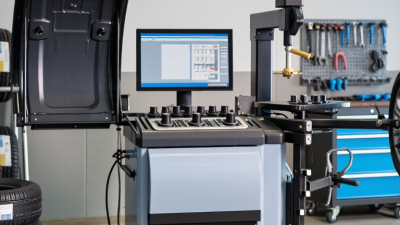
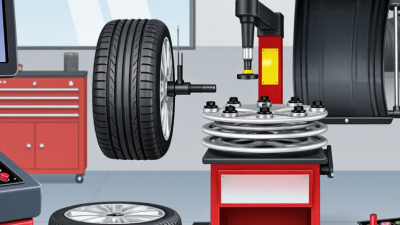
A car balancing machine measures how weight is distributed around a wheel and tire. The operator mounts the assembly on a spindle and enters details such as wheel width and diameter. Sensors detect vibration as the wheel spins. The machine uses these readings to estimate where imbalance occurs and how much correction is needed. Small differences matter.

An imbalance can cause steering-wheel shake, uneven tire wear, or vibration at certain speeds. Many machines identify both static and dynamic imbalance. Static imbalance relates to a heavy spot across the wheel’s circumference; dynamic imbalance involves uneven weight across its width. The display may show correction points in clear numbers, but correct mounting still matters. A poorly seated wheel can produce misleading readings.

The technician attaches weights at the indicated positions, then spins the wheel again to check the result. Clean contact surfaces and secure clamping help improve repeatability. Calibration and routine inspection matter, too. Real workshops are less tidy than manuals suggest. A clean display is not proof of a perfect setup, so experienced operators look for unusual readings and recheck when needed. A little judgment remains necessary.

Main Types and Features of Balancing Machines

Main Types and Features of Balancing Machines

Choosing a car wheel balancing machine starts with the work it must handle. Static balancers detect imbalance in one plane and suit basic checks. Dynamic models measure both inner and outer wheel planes, helping technicians place weights more precisely. Road-force machines add a load roller that presses against the tire, revealing stiffness variation that ordinary spinning may miss. Automated models can speed up repeat jobs with automatic measurement and weight-position guidance.

Technical limits matter. ISO 21940-11:2016 describes balance quality grades, including G 2.5 and G 6.3; permissible residual unbalance depends on rotor mass and operating speed. These figures are not direct wheel-service limits, so machine settings should follow the wheel and equipment specifications. A clear display helps, but calibration, repeatability, and compatibility with wheel sizes deserve equal attention. I have seen a fast machine still produce confusing results when setup data is wrong.

Tips: Check calibration regularly. Keep the wheel cone and shaft clean, and confirm clamping before each spin. For mixed workshop jobs, compare cycle time and measurement repeatability—not just advertised accuracy. Road-force systems can add useful diagnosis, though they cost more and need careful operation.

Best Car Balancing Machine Manufacturer in China? - Main Types and Features of Balancing Machines

Machine Type Balancing Method Typical Applications Main Features Points to Consider
Static wheel balancer Measures imbalance in a single plane. Basic balancing tasks and wheel assemblies where single-plane correction is appropriate. Simple operating principle; generally has fewer setup steps than dynamic equipment. Does not identify separate inner- and outer-plane correction amounts, so it is not a substitute for two-plane balancing when that is required.
Dynamic (two-plane) wheel balancer Measures imbalance in two planes across the wheel width. Common passenger-car and light-vehicle wheel service. Indicates correction amounts and positions for the inner and outer planes; supports common clip-on and adhesive-weight procedures, depending on the machine. Correct results depend on proper centering, suitable adapters, accurate wheel measurements, and following the machine’s calibration procedure.
Semi-automatic wheel balancer Usually performs dynamic, two-plane measurement with some operator-entered setup data. General repair shops and tire-service operations with regular wheel-balancing work. A display guides the operator through wheel data entry and correction; some models include automatic distance or diameter measurement. The operator may still need to measure or enter some wheel dimensions and position correction weights manually.
Automatic or advanced digital wheel balancer Typically uses electronic sensing for dynamic balancing and may automate selected measurement or positioning steps. Busy tire shops seeking a more guided workflow and reduced manual data entry. Depending on configuration, may offer automatic wheel-data measurement, weight-position guidance, multiple balancing modes, and a protective hood. Automation features differ by model. Confirm which steps are automatic and check service, calibration, and software support requirements.
Heavy-duty or truck wheel balancer Measures imbalance for larger and heavier wheel assemblies; balancing functions vary by machine design. Commercial-vehicle, bus, and truck tire service, subject to the machine’s rated capacity. Designed with a suitable shaft, fixtures, and support arrangement for the specified wheel and tire assemblies. Check the machine’s rated wheel dimensions and weight, available adapters, lifting or handling needs, and installation space before purchase.

Specifications and automation levels vary by model. Compare rated wheel size and weight, measurement functions, adapters, calibration procedures, guarding, power requirements, training, and after-sales service for the intended workshop.

How to Evaluate Car Balancing Machine Manufacturers in China

Best Car Balancing Machine Manufacturer in China? How to Evaluate Car Balancing Machine Manufacturers in China

Choosing a manufacturer takes more than comparing prices or reading a polished catalogue. Grand View Research estimated the global automotive aftermarket at USD 449.7 billion in 2023, with continued growth forecast through 2030. That expanding market makes dependable service equipment important, but market growth alone cannot prove a machine’s quality. Ask suppliers for documented test results, calibration records, warranty terms, and spare-parts availability.

ISO 21940-21:2012 describes methods for evaluating balancing machines. Use it as a technical reference, not as proof that a particular model meets your workshop’s needs. Request a live demonstration using a wheel close to your typical size and weight. Check whether repeated runs produce consistent readings, and ask how the machine handles calibration and operator errors. A fast cycle is useful. Stable results matter more. Brochures may not show performance after months of daily use, so ask for customer references and clear maintenance instructions.

Tips: Bring your own test wheel when possible. Compare several consecutive readings, not one impressive result. Confirm local training, software support, and spare-part lead times in writing. If a supplier cannot explain its testing method plainly, pause and ask again.

Key Factors in Choosing the Best Manufacturer for Your Needs

Choosing a Chinese car balancing machine manufacturer means checking performance under real workshop conditions, not just comparing price sheets. Ask for repeatability data, measurement resolution, maximum wheel diameter, and supported wheel weights. Then test the same wheel several times. The readings should return consistently. Small differences matter.

Demand data gives useful context, but not a quality guarantee. The Auto Care Association and MEMA’s 2024 Joint Forecast estimated the U.S. light-vehicle aftermarket at about $435 billion in 2024. S&P Global Mobility reported an average U.S. vehicle age of 12.6 years in 2024. Older vehicles bring varied wheel and tire conditions, so ask whether the machine handles different rim sizes and common imbalance patterns reliably.

Check calibration procedures, operator training, spare-part availability, and response times for technical support. Request a live demonstration using a visibly scratched rim and a wheel with an adhesive weight already fitted. Practical details count. Review the warranty wording and confirm which components it covers. A factory visit or independent inspection can help verify assembly and quality checks, though it takes time and may not reveal every weakness. One uncomfortable point: polished test reports are easy to share; dependable service over several years is harder to prove. Ask for customer references and clear records.