How to Choose the Best Two Post Car Lift for Global Buyers
Choosing the best Two Post Car Lift for global buyers requires more than comparing lifting capacity and price. A workshop in Canada may need a different configuration from one in Southeast Asia. Ceiling height, vehicle weight, concrete strength, power supply, climate, and local service support can change the right decision.
The Automotive Lift Institute’s R.W. “Bob” O’Gorman has emphasized, “The only safe lift is a lift that is properly installed, inspected, and maintained.” That principle should guide every purchase. Buyers should check recognized safety certifications, tested locking systems, arm restraint performance, and installation instructions. A 4,000-kilogram rating means little if the floor cannot support the columns. Measure twice.
This guide examines practical details that product pages often hide. It compares symmetric and asymmetric designs, minimum bay dimensions, adapter heights, drive-through clearance, and vehicle access. It also considers shipping damage, replacement parts, technician training, warranty conditions, and voltage compatibility. These details affect real ownership costs.
A lower price can become expensive. A small workshop may prefer a compact model, while a busy service center may need faster operation and stronger daily-use components. Buyers should request load-test records, manuals, certification documents, and references from similar installations. Local building requirements still matter, even when the lift carries international approval.
No single Two Post Car Lift suits every market. Some recommendations may appear obvious but fail in a low-ceiling facility or humid environment. Careful selection remains slower than impulsive purchasing, yet it usually protects equipment, technicians, vehicles, and long-term business reliability.
Understanding Two-Post Car Lift Designs and Lifting Systems
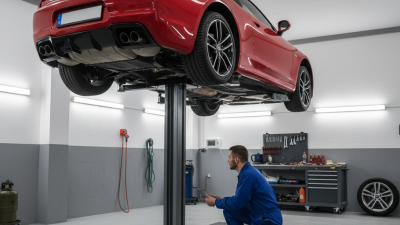
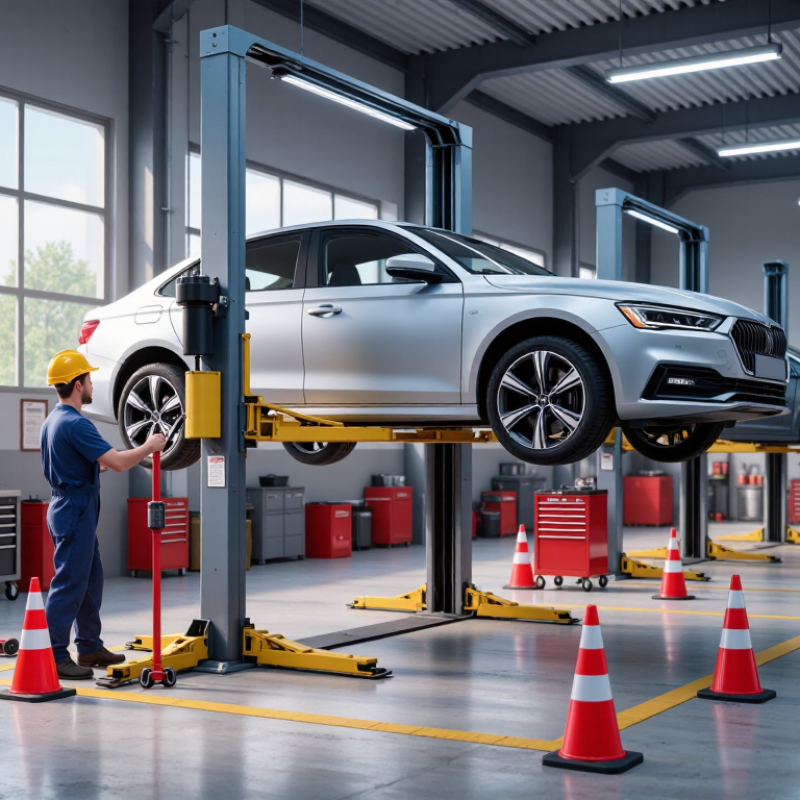
Choosing a two-post car lift begins with its design, not its advertised capacity. Symmetrical lifts place posts directly opposite each other, supporting vehicles near the center. They suit heavier vans and frequent service work. Asymmetrical designs rotate the columns slightly, leaving more door clearance for passenger cars. That small angle matters in a narrow workshop.
Lifting systems also change daily performance. Hydraulic lifts usually provide smooth movement and lower installation complexity. Screw-driven systems can offer precise positioning, but they require disciplined maintenance and clean, protected components. The Automotive Lift Institute recommends checking rated capacity, locking systems, adapters, and installation conditions against recognized safety standards. Fortune Business Insights’ 2024 automotive lift market analysis estimates steady global growth, with workshops increasingly demanding safer and more efficient equipment. Growth alone does not prove suitability. I have seen buyers focus on height, then discover their concrete floor is inadequate.
Tips:
Measure the tallest vehicle, door swing, ceiling height, and aisle width. Confirm the slab’s thickness and strength with a qualified local engineer. Check whether the lift matches your region’s voltage and inspection requirements. Leave practical space around both posts. A tight layout becomes frustrating quickly. Also, do not treat automatic locks as a substitute for careful operator training. The choice may still feel imperfect; vehicle variety, climate, and technician habits can conflict. That is exactly why a site-specific assessment matters.
Comparing Safety Features, Certifications, and Installation Standards
Choosing the best two-post car lift starts with verified safety performance, not lifting capacity alone. Mechanical locking systems should engage automatically at every height. Look for arm restraints, slack-cable detection, overload protection, and clearly marked emergency controls. Details matter. These features reduce risks when a vehicle shifts unexpectedly.
Global buyers should request certification documents before comparing prices. EN 1493 supports vehicle-lift safety requirements in European markets. ASME PALD may apply in North America, while local electrical and workplace rules still matter. A certificate is useful only when it matches the exact model. Check the serial number, rated load, test scope, and issuing organization. Do not guess.
Installation standards can determine real-world safety. The concrete slab needs suitable thickness, strength, and reinforcement. Anchors must match the manufacturer’s specifications and receive documented torque checks. Power connections should follow local electrical codes, including grounding and emergency isolation. A level floor is essential. Small errors become serious later. Buyers should use trained installers and keep commissioning records, inspection photos, and maintenance logs. In practice, paperwork can appear complete while the slab remains unsuitable. That is an uncomfortable weakness worth examining before delivery. Regular inspections should test locks, cables, hydraulic components, arm restraints, and anchor tightness. A lift is only as reliable as its installation and ongoing care.
Evaluating Durability, Maintenance Needs, and Total Ownership Costs
How to Choose the Best Two Post Car Lift for Global Buyers
Evaluating Durability, Maintenance Needs, and Total Ownership Costs
A two post lift should be judged beyond its purchase price. Frame steel, weld quality, anchor design, and corrosion protection directly affect service life. In coastal workshops, road salt can attack exposed hardware quickly. Ask for coating tests, fatigue-cycle data, and concrete requirements. They reveal more than polished catalog photographs.
The U.S. Department of Energy’s Operations & Maintenance Best Practices Guide reports that preventive maintenance may reduce costs by 12% to 18% compared with reactive repairs. That figure supports scheduled lubrication, cable or chain checks, hydraulic inspections, and torque verification. Small tasks matter. ALI guidance also emphasizes documented periodic inspections by qualified personnel. Global buyers should confirm local inspection rules and available technicians before ordering. A lift needing imported seals may create expensive downtime.
Calculate total ownership costs over ten years. Include freight, installation, electrical work, inspections, replacement parts, training, and lost workshop hours. A cheaper lift can cost more when spare parts travel slowly. I have seen buyers overvalue lifting capacity and undervalue service access. That is an imperfect decision. Still, it is common. Request failure-rate evidence, warranty exclusions, and a written maintenance schedule. Compare expected annual costs, not only the invoice.
How to Choose the Best Two Post Car Lift for Global Buyers - Evaluating Durability, Maintenance Needs, and Total Ownership Costs
Indicative comparison of common two-post lift configurations for passenger vehicles and light commercial service applications.
Data basis:
Typical market ranges shown in USD. Total ownership cost is estimated over 10 years and includes equipment purchase, professional installation, scheduled maintenance, periodic inspection, normal replacement parts, and electricity. Local taxes, shipping, civil works, financing, and unexpected repairs are excluded.
| Lift Configuration |
Rated Capacity |
Typical Vehicle Use |
Minimum Ceiling Height |
Typical Purchase Price |
Installation Cost |
Expected Service Life |
Recommended Duty Level |
Scheduled Maintenance |
Estimated 10-Year TCO |
Durability and Selection Notes |
| Low-Ceiling Asymmetric Lift |
8,000 lb
(3,629 kg) |
Cars, compact SUVs, light vans |
11–12 ft
(3.35–3.66 m) |
$2,800–$3,800 |
$600–$1,000 |
12–18 years |
Light to medium |
Every 3–6 months |
$7,820 |
A practical choice where ceiling height is restricted. The shorter columns may limit lifting height for tall vehicles. Best value depends on correct concrete thickness, anchor installation, and regular lock and cable inspections. |
| Standard Symmetric Lift |
9,000 lb
(4,082 kg) |
Passenger cars, SUVs, pickups |
12–13 ft
(3.66–3.96 m) |
$3,200–$4,500 |
$700–$1,200 |
15–20 years |
Medium to high |
Every 3–6 months |
$8,950 |
A balanced option for general repair shops. Symmetric loading provides good weight distribution for many vehicles, while dual hydraulic cylinders and mechanical safety locks can support long-term reliability when maintained correctly. |
| Extended-Height Asymmetric Lift |
10,000 lb
(4,536 kg) |
SUVs, pickups, performance vehicles |
13–14 ft
(3.96–4.27 m) |
$4,000–$5,800 |
$900–$1,400 |
15–20 years |
High |
Every 3 months |
$10,650 |
The offset-column design generally improves door access and vehicle positioning. Choose this configuration when technician access, SUV coverage, and lifting height are more important than the lowest purchase price. |
| Heavy-Duty Symmetric Lift |
12,000 lb
(5,443 kg) |
Heavy SUVs, pickups, light commercial vehicles |
13–14 ft
(3.96–4.27 m) |
$4,800–$6,800 |
$1,000–$1,600 |
18–22 years |
High and continuous |
Monthly visual checks; service every 3 months |
$11,950 |
A strong choice for workshops handling heavier vehicles regularly. Higher structural capacity normally increases concrete, installation, and replacement-part requirements, so the rated capacity should match actual vehicle weights rather than provide unnecessary oversizing. |
| Extra-Heavy Symmetric Lift |
15,000 lb
(6,804 kg) |
Large pickups, vans, specialized service vehicles |
14–16 ft
(4.27–4.88 m) |
$7,000–$9,000 |
$1,300–$2,000 |
18–25 years |
Very high |
Monthly visual checks; service every 1–3 months |
$16,500 |
Suitable only when heavy vehicles represent a substantial share of workshop demand. Confirm floor engineering, anchoring requirements, lifting-point compatibility, and local inspection rules before purchase. |
Durability Priorities
Prioritize column steel thickness, weld quality, corrosion protection, hydraulic-cylinder sealing, mechanical safety locks, synchronized lifting, and the availability of replacement cables, seals, adapters, and rollers.
Maintenance Priorities
Inspect cables, hoses, anchors, arm restraints, adapters, locks, and structural members routinely. Lubricate moving parts according to the service manual and stop operation if abnormal noise, leakage, uneven lifting, or damaged hardware is found.
Global Buying Checks
Verify electrical compatibility, local safety certification, concrete specifications, installation training, spare-parts logistics, operator documentation, warranty terms, and the inspection requirements of the destination country.
Important: Capacity, service life, maintenance intervals, and ownership costs vary with usage frequency, loading practices, climate, installation quality, floor condition, and local labor rates. Always follow the lift manufacturer's technical manual and applicable local regulations.
Selecting a Reliable Supplier for Global Delivery and Support
Choosing the best two post car lift starts with the supplier, not the lowest quoted price. Global buyers need clear specifications, stable production, and dependable communication. Ask for verified load ratings, steel details, installation drawings, and recent quality inspection records. A polished catalog is not proof.
Reliable suppliers explain delivery terms before payment. They should provide strong export packaging, packing photos, tracking details, and a realistic production schedule. Confirm how they handle missing parts or transit damage. Support also matters after installation. Look for video guidance, technical manuals, replacement components, and a clear response time. Time-zone differences can slow urgent troubleshooting. This detail is often overlooked.
Tips: Request a sample inspection report and a live product video. Check whether the supplier understands your destination’s safety requirements. Ask who pays for replacement parts and technical visits. Test communication with a few detailed questions before ordering. Slow replies may become a serious problem later. Keep every specification in writing. I would also allow extra delivery time, because international shipping rarely follows the first estimate perfectly.