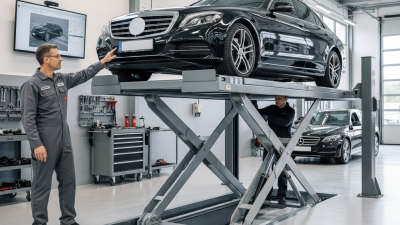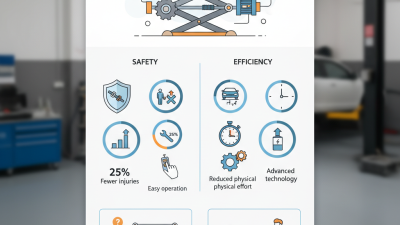
A busy auto shop needs lifting equipment that saves floor space without sacrificing access, stability, or technician confidence. That is where a Mid-Rise Scissor Lift becomes useful. It can raise many passenger vehicles to a comfortable working height while leaving the bay more open than a traditional two-post lift. Still, “compact” does not automatically mean “safe.”
The U.S. vehicle fleet continues to age. S&P Global Mobility reported an average vehicle age of approximately 12.6 years in 2024. Older vehicles often require more suspension, brake, exhaust, and underbody repairs. These jobs demand clear access, dependable locking systems, and practical load capacity. The Automotive Lift Institute also stresses third-party certification, proper installation, and routine inspection. Its former president, R.W. “Bob” O’Gorman, has warned, “If it’s not certified, you don’t know what you’re getting.” That point deserves attention.
This guide compares seven leading mid-rise scissor lifts for professional auto shops. We examine lifting capacity, minimum and maximum height, platform design, arm reach, safety locks, portability, and service support. We also consider awkward details, such as door clearance, uneven floors, and where a technician places a transmission jack. Those details can decide whether a lift feels efficient or frustrating.
Specifications are not the whole story. A lift may look impressive on a product page but work poorly in a crowded bay. Manufacturer claims also need careful checking. Use the shortlist as a practical starting point, then confirm certification, warranty terms, installation requirements, and local service availability before buying.
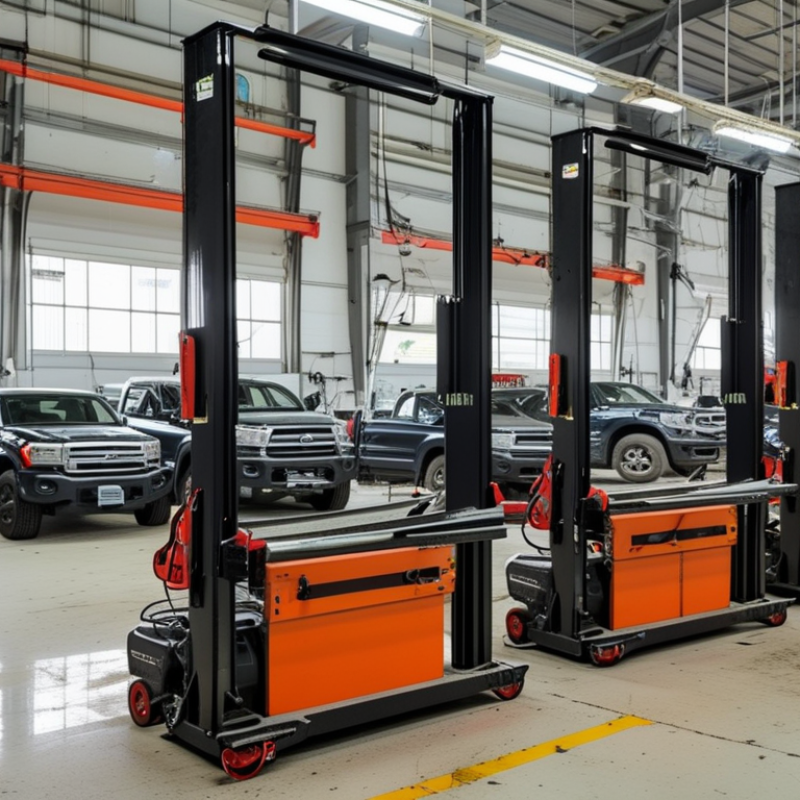
A mid-rise scissor lift raises a vehicle from the floor without requiring tall shop columns. Most models provide roughly 36 to 48 inches of lifting height, although definitions vary by design. That height exposes wheels, brakes, suspension, and rocker panels while keeping the ceiling area open. Space matters. The platform sits beneath approved lifting points. Hydraulic cylinders then push linked steel arms upward in a synchronized motion. Mechanical locks or locking bars should support the load during service, rather than relying only on hydraulic pressure.
In daily shop work, technicians drive over short ramps and position the vehicle carefully. The lift then rises vertically, keeping the tires off the floor. Wheel-free access is useful for tire rotation and underbody inspections. However, uneven loading can shift the vehicle’s center of gravity. OSHA requires employers to follow equipment instructions, inspect lifting components, and control nearby hazards. The ANSI/ALI ALOIM standard also emphasizes qualified inspection, maintenance, and operation of automotive lifts.
The risk deserves attention. IPAF’s 2024 Global Safety Report recorded 118 powered-access fatalities worldwide during 2023. That figure covers multiple equipment types, not scissor lifts alone, but it reinforces disciplined lift practices. A practical inspection should check hydraulic leaks, arm pins, locks, ramps, and floor damage. Do not improvise with wood blocks. That sounds simple. In reality, rushed positioning remains a weak point in busy shops. Mid-rise lifts save floor space, but their lower clearance can restrict transmission work and exhaust repairs. Selecting one requires measuring vehicle weight, lifting-point reach, floor capacity, and the technician’s actual workflow.
| Configuration | Rated Capacity | Maximum Rise | Minimum Height | Platform Length | Platform Width | Best Workshop Use | How It Works |
|---|---|---|---|---|---|---|---|
| Compact drive-on scissor lift | 6,000–7,000 lb (2,722–3,175 kg) |
36–48 in (914–1,219 mm) |
4–6 in (102–152 mm) |
72–84 in (1,829–2,134 mm) |
22–24 in (559–610 mm) |
Tire, brake, suspension, and exhaust service on passenger cars | A hydraulic power unit pushes one or more cylinders, raising linked scissor arms and the vehicle platforms. |
| Wide-platform service lift | 7,000–9,000 lb (3,175–4,082 kg) |
45–54 in (1,143–1,372 mm) |
5–7 in (127–178 mm) |
78–88 in (1,981–2,235 mm) |
24–26 in (610–660 mm) |
General repair shops handling sedans, crossovers, and light-duty vehicles | The synchronized hydraulic system lifts both platforms while mechanical safety locks support the load at working height. |
| Flush-mount scissor lift | 6,000–8,000 lb (2,722–3,629 kg) |
42–50 in (1,067–1,270 mm) |
0–2 in (0–51 mm) |
72–84 in (1,829–2,134 mm) |
22–25 in (559–635 mm) |
Shops that need a clear floor when the lift is lowered | The lift is installed in a recessed floor pocket, allowing the platforms to sit nearly level with the shop floor when fully lowered. |
| Portable wheel-engaging scissor lift | 6,000–7,000 lb (2,722–3,175 kg) |
24–40 in (610–1,016 mm) |
4–6 in (102–152 mm) |
68–80 in (1,727–2,032 mm) |
20–24 in (508–610 mm) |
Multi-bay shops that need flexible equipment placement | Integrated casters or a mobile frame allow the unloaded lift to be repositioned; wheel restraints keep the vehicle aligned during service. |
| Long-platform SUV and light-truck lift | 8,000–10,000 lb (3,629–4,536 kg) |
forty-eight–54 in (1,219–1,372 mm) |
6–8 in (152–203 mm) |
84–96 in (2,134–2,438 mm) |
24–28 in (610–711 mm) |
SUV, pickup, wheel, tire, and underbody inspection work | Longer platforms distribute the vehicle load over a larger contact area while the scissor mechanism raises the platforms vertically. |
| Alignment-compatible mid-rise lift | 8,000–10,000 lb (3,629–4,536 kg) |
48–60 in (1,219–1,524 mm) |
6–8 in (152–203 mm) |
80–92 in (2,032–2,337 mm) |
24–28 in (610–711 mm) |
Shops performing steering, suspension, and wheel-alignment preparation | Rigid platforms, adjustable turn plates, and slip plates help maintain wheel geometry when the vehicle is raised. |
| Low-profile performance-car lift | 6,000–8,000 lb (2,722–3,629 kg) |
36–48 in (914–1,219 mm) |
3–5 in (76–127 mm) |
72–84 in (1,829–2,134 mm) |
20–24 in (508–610 mm) |
Sports cars, lowered vehicles, and detailing or underbody inspection | Low-entry ramps and slim platforms reduce approach-angle problems while hydraulic cylinders provide controlled vertical lifting. |
A mid-rise scissor lift must match the vehicles your shop actually services. S&P Global Mobility reported that the average U.S. vehicle age reached 12.6 years in 2024. That means technicians may handle compact cars, older sedans, and heavier electric vehicles in one week. Check the lift’s rated capacity, lifting height, and platform length against real vehicles, not catalog assumptions. Leave a safety margin. It matters.
Look closely at the minimum height. A low-profile design helps with sports cars and vehicles with limited ground clearance. Adjustable adapters improve contact with different chassis points. Wide platforms offer better support, but they can block wheels and suspension components. A certified lifting system should include mechanical locks, visible lock engagement, and clear load instructions. The Automotive Lift Institute advises using properly certified equipment and following the manufacturer’s installation and inspection requirements. Concrete thickness also deserves attention. A powerful lift cannot correct a weak slab.
Ergonomics is easy to underestimate. The U.S. Bureau of Labor Statistics reports more than 780,000 automotive service technicians and mechanics in the country. Small height differences affect thousands of daily tasks. Choose controls that remain reachable, with smooth descent and enough space between platforms. Mobile kits can improve bay flexibility, though they may reduce stability on uneven floors. I would not trust a lift simply because it looks heavy. Noise, adapter placement, maintenance access, and awkward door clearance can expose weaknesses after installation. Real shop testing is still necessary.
Professional auto shops need dependable access, stable positioning, and a clear working area. Mid-rise scissor lifts usually raise vehicles about 36 to 48 inches. That height suits tire service, brake work, suspension repairs, and underbody inspections.
A compact portable scissor lift fits shops that change work bays frequently. A wide-deck model gives technicians better footing around larger vehicles. A recessed installation creates a cleaner floor and reduces trip hazards.
A frame-engaging lift supports vehicles through approved lifting points. A drive-on platform speeds up tire and alignment preparation. A low-profile design works well with sports cars and vehicles having limited ground clearance.
A heavy-duty version offers greater capacity for vans, SUVs, and frequent commercial work.
Check the rated capacity carefully.
The best professional choice depends on daily workload, vehicle mix, and floor construction. Look for mechanical locks, accessible controls, protective hose routing, and clearly marked lifting points. A lift should lower evenly, even when the vehicle is not perfectly centered. That detail matters during busy service hours. Measure the bay before purchasing. Door clearance, platform width, and anchor requirements can change the decision.
Some shops focus too much on maximum capacity. That can be a mistake. A heavier lift may consume valuable floor space and slow repositioning. Others overlook minimum arm or pad height. I would also inspect lock engagement during commissioning, not only during annual servicing.
Specifications look reassuring, but technician access and routine maintenance often decide whether a lift performs well. Safety training, scheduled inspections, and vehicle-specific lifting procedures remain essential.
Choosing among the seven best mid-rise scissor lifts starts with the shop’s daily work. A compact lift suits tire changes, brake repairs, and quick inspections. A longer platform supports larger cars and light vans. For exhaust work, choose open access between the platforms. For detailing, low drive-over ramps reduce setup time. Technicians handling battery systems need stable support, clear underside access, and sufficient capacity. Always compare the lift’s rated load with the heaviest vehicle in your bay. Then check lifting height, pad adjustment, bay width, and floor requirements.
Tips: Measure twice, including door clearance and vehicle wheelbase. Keep at least a small working margin below the rated capacity. Confirm that the locking system engages automatically at usable heights. Read the installation manual before choosing a location. A lift that fits on paper may still block tool cabinets or emergency paths.
Experience often exposes the overlooked details. Some lifts raise quickly but leave limited room for transmission work. Others offer better access but require more careful vehicle positioning. I have seen technicians blame a lift when the real problem was poor pad placement. That mistake is easy to repeat. Inspect hoses, locks, cables, and contact points regularly. Use manufacturer-approved procedures and trained operators, because convenience should never replace controlled lifting.
Installation begins with a level, load-bearing concrete floor. Check thickness, cracks, drainage, and overhead clearance before positioning the lift. A qualified technician should install anchors, hydraulic lines, electrical connections, and mechanical locks according to the equipment manual and local requirements. Do not rely on appearance alone. A lift can look correctly aligned while carrying uneven stress.
Safe operation requires clear communication and steady movements. Center the vehicle carefully over the platforms, then raise it a few inches. Stop and check balance, contact points, and unusual noises. Continue lifting only when the vehicle remains stable. Engage the mechanical locks before working underneath. Never exceed the rated capacity, bypass safety devices, or leave a raised vehicle unattended. Small oversights become serious quickly.
Tips: Inspect platforms, arms, hoses, and cables before each shift. Keep the floor dry and remove loose tools. Lubricate approved pivot points on schedule. Check anchor tightness and hydraulic fluid levels regularly. Record inspections with dates and findings. If a lock fails to engage, stop using the lift immediately. A rushed inspection is better than no inspection, but it is still not good enough. Review the maintenance schedule after heavy daily use, because workshop conditions can expose weaknesses earlier than expected.