Top 10 Inground Scissor Lifts: What You Need to Know Before Buying
When considering the purchase of an Inground Scissor Lift, it is crucial to equip yourself with the right knowledge to make an informed decision. John Smith, an expert in the automotive servicing industry, emphasizes, "Choosing the right scissor lift is not just about the price; it’s about safety, reliability, and the specific needs of your workspace." An Inground Scissor Lift is a valuable investment for any garage or workshop, providing superior accessibility and efficiency for various automotive tasks.
Understanding the features, benefits, and drawbacks of these lifts can significantly influence their performance and your overall experience. This guide delves into the top ten Inground Scissor Lifts available, highlighting key factors such as weight capacity, lifting speed, and safety features that you should consider before making a purchase. By arming yourself with expert insights and knowledge, you will be better positioned to select an Inground Scissor Lift that not only meets your operational requirements but also enhances productivity and safety in your workspace.

Understanding Inground Scissor Lifts: Key Features and Benefits
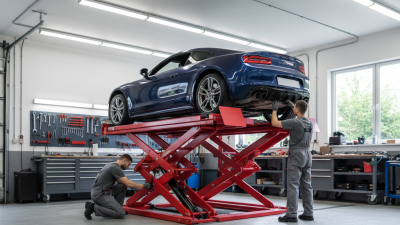
Inground scissor lifts are an essential tool for automotive professionals, providing efficient and safe access to vehicles for maintenance and repairs. One of the key features of these lifts is their design, which allows them to be installed flush with the ground. This not only saves space in garages but also ensures that the lifting platform is easily accessible for vehicles. The low-profile design enhances safety by minimizing the risk of tripping hazards, making it ideal for busy work environments.
Moreover, the benefits of inground scissor lifts extend beyond convenience. They typically offer greater lifting capacity compared to above-ground models, accommodating a wide range of vehicle sizes. Their robust construction and hydraulic system ensure high performance and durability, which is crucial for heavy-duty tasks. Additionally, the more stable lift platform reduces the likelihood of accidents during operation, providing peace of mind for technicians. Overall, understanding these features and advantages will help buyers choose the right lift tailored to their specific needs, ensuring both efficiency and safety in their operations.
Top 10 Inground Scissor Lifts: Key Features and Benefits
This chart illustrates key specifications for top inground scissor lifts, including lift capacity, platform size, max lift height, weight, overall size, and price. Understanding these features can help in selecting the right lift for your needs.
Types of Inground Scissor Lifts: Choosing the Right Model for Your Needs
When selecting the right inground scissor lift, understanding the different types available is essential for making an informed purchase. Inground scissor lifts primarily come in two configurations:
hydraulic and
electric.
Hydraulic lifts are renowned for their robust lifting capabilities and are often used in environments requiring heavy-duty performance. According to a report by the Material Handling Industry, approximately 60% of scissor lift market sales are attributed to hydraulic systems due to their reliability and strength.
On the other hand, electric scissor lifts are popular for their efficiency and eco-friendliness, making them ideal for indoor use or in operations sensitive to noise and emissions.
A study by the American National Standards Institute suggests that the global demand for electric scissor lifts is rising, with a projected annual growth rate of 7.5%.
When choosing between these types, consider your operational environment, the weight load requirements, and the frequency of use. It's crucial to match the lift characteristics not just to your immediate needs but also to potential future requirements, ensuring that your investment will serve you well over time.
Important Specifications to Consider When Buying Inground Scissor Lifts
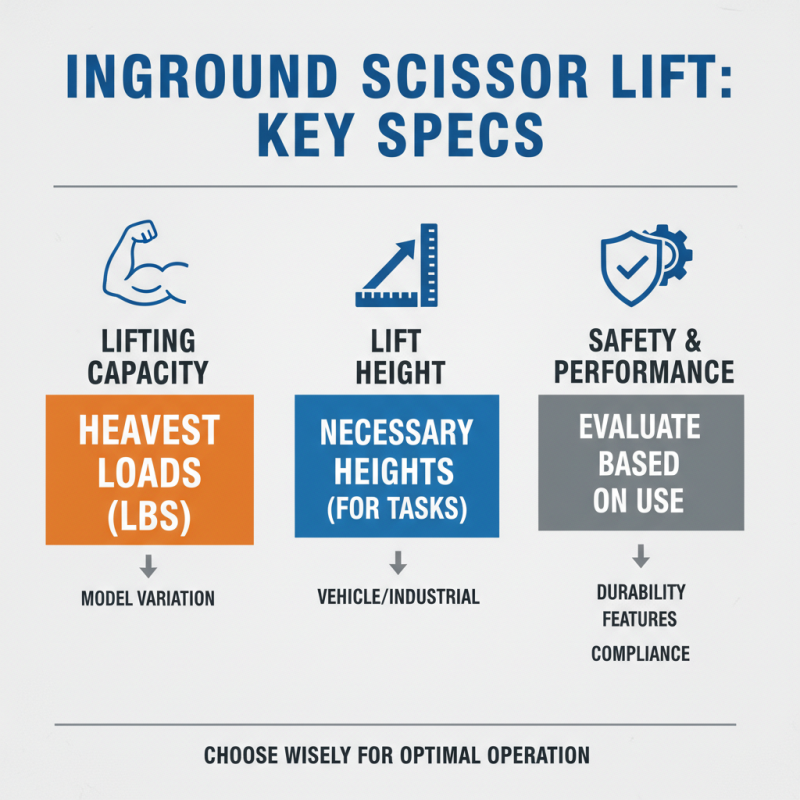
When considering the purchase of an inground scissor lift, it is crucial to focus on several important specifications that can greatly influence performance and safety. First and foremost, the lifting capacity should be evaluated based on the heaviest loads you plan to lift. This capacity is typically measured in pounds and will vary from model to model. Additionally, the lift height is a significant factor; ensure that the lift can reach the necessary heights for your specific applications, whether for vehicle maintenance or industrial tasks.
Another key specification to consider is the platform size. The dimensions of the platform will determine the amount of space available for working on machinery or vehicles. It's important to choose a size that accommodates your typical work volume without overcrowding. Moreover, safety features should be a priority; look for models equipped with emergency stop buttons, overload protection, and safety locks. Finally, consider the lift's power requirements, including whether it operates on hydraulic or electric systems, ensuring compatibility with your existing infrastructure.
Installation and Maintenance Tips for Inground Scissor Lifts
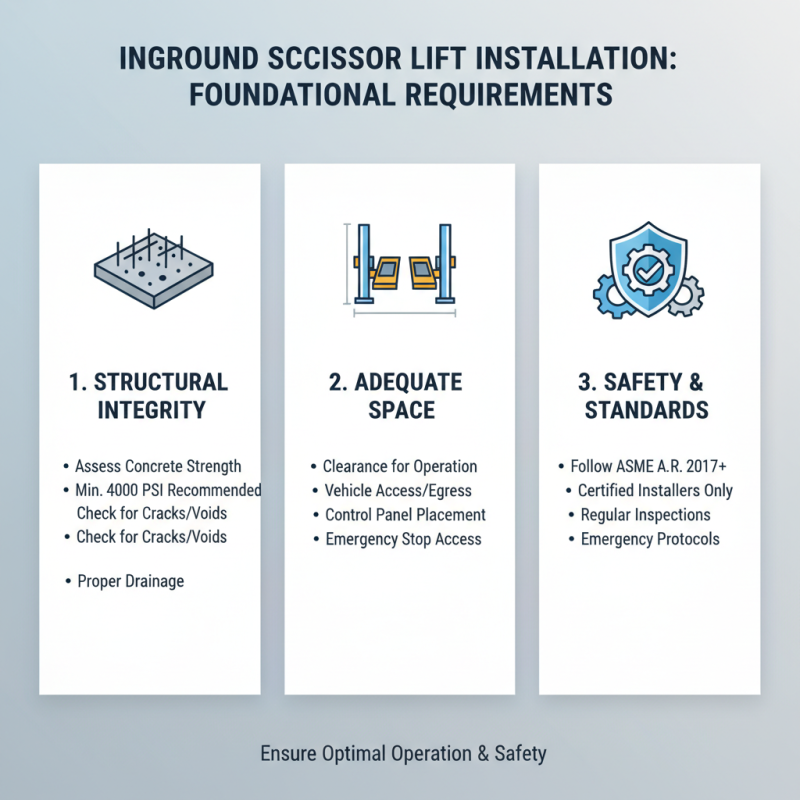
When considering the installation of inground scissor lifts, understanding the foundational requirements is crucial for ensuring optimal operation and safety. According to industry standards, proper installation involves assessing the structural integrity of the concrete and ensuring adequate space for lift operation. As reported by the American Society of Mechanical Engineers (ASME), improper installation can lead to significant safety hazards, highlighting the necessity of following specific guidelines during setup.
**Tips for Installation:**
1. Prioritize a level surface; an uneven base can cause the lift to malfunction or present safety issues.
2. Ensure that electrical and hydraulic systems are installed according to manufacturer specifications, as deviations may void warranties and lead to performance issues.
Maintenance is just as vital for enhancing the life expectancy and reliability of inground scissor lifts. Regular inspections are recommended to identify wear and tear on moving parts, adhering to guidelines set forth by the Occupational Safety and Health Administration (OSHA). They recommend semi-annual reviews to align with safety standards and reduce the risk of breakdowns, which can be detrimental to productivity.
**Tips for Maintenance:**
1. Schedule routine lubrication of all moving parts to minimize friction and wear.
2. Keep an eye on hydraulic fluid levels and inspect hoses for any signs of leaks or damage, ensuring that components function smoothly and safely.
Safety Standards and Regulations for Inground Scissor Lifts Usage
When considering the purchase of an inground scissor lift, understanding the
safety standards and regulations that govern
their usage is paramount. These lifts must comply with specific industry standards
to ensure the safety of operators and maintenance personnel. The Occupational Safety and Health
Administration (OSHA) outlines regulations that address not only the design and manufacturing of
these lifts but also their operation and maintenance. Regular inspections,
proper training for operators, and adherence to load capacity limits are crucial aspects dictated
by these standards.
Moreover, it is essential to be aware of local regulations
that may vary depending on the jurisdiction. Compliance with standards developed by the American National Standards Institute (ANSI) and the
International Organization for Standardization (ISO)
can also play a significant role in ensuring safety. These organizations provide guidelines on
installation practices and operational protocols to minimize risks associated with using scissor lifts.
Proper safety measures, including the use of personal protective equipment (PPE) and emergency protocols,
must be integrated into daily operations to prevent accidents and ensure a safe working environment.