10 Essential Tips for Car Alignment and Balancing You Must Know
When it comes to vehicle maintenance, understanding the importance of "Car Alignment And Balancing" is crucial for every car owner. Renowned automotive expert, Dr. James Whitaker, emphasizes this by stating, "Proper car alignment and balancing not only enhance the longevity of your vehicle but also ensure optimal safety while driving." This underscores the significant role that these services play in the overall performance of a vehicle.
Car alignment refers to the adjustment of a vehicle's suspension system, ensuring that the wheels are set to the correct angles. Balancing, on the other hand, involves distributing the weight of the wheels evenly. Neglecting these aspects can lead to uneven tire wear, steering problems, and decreased fuel efficiency. With the right knowledge and practices, drivers can maintain their vehicles in excellent condition, ultimately prolonging their lifespan and enhancing driving comfort.
In this article, we present ten essential tips for car alignment and balancing that every vehicle owner should know. By following these guidelines, you can take proactive steps to ensure that your car remains in top-tier condition, promoting not just a smoother ride but also securing your safety on the road.

Understanding the Importance of Car Alignment and Balancing
Car alignment and balancing are crucial aspects of vehicle maintenance that significantly affect performance, safety, and longevity. Proper alignment ensures that all four wheels are positioned correctly relative to each other and the road, resulting in improved handling and tire wear. When a vehicle is misaligned, it can lead to uneven tire wear and an uncomfortable driving experience, making it essential to address any signs of misalignment promptly.
Balancing, on the other hand, is the process of ensuring that the weight of each tire and wheel is evenly distributed around the axle. This is vital for maintaining stability at various speeds and minimizing vibrations during driving. An unbalanced wheel can cause excessive wear on suspension components and tires, as well as a reduction in fuel efficiency. Regular checks and adjustments for both alignment and balancing can lead to a smoother ride, improved safety, and extended lifespan of your vehicle’s tires. Recognizing the importance of these processes not only enhances your driving experience but also contributes to overall vehicle health.
10 Essential Tips for Car Alignment and Balancing You Must Know
| Tip Number |
Tip |
Importance |
Frequency of Checks |
| 1 |
Check Tire Pressure |
Ensures even tire wear |
Monthly |
| 2 |
Inspect Suspension System |
Improves ride quality |
Every 6 months |
| 3 |
Get a Professional Alignment |
Enhances handling and safety |
Yearly |
| 4 |
Rotate Tires |
Promotes even tread wear |
Every 5,000 - 7,500 miles |
| 5 |
Check Wheel Alignment after Tire Replacement |
Ensures proper handling |
Always |
| 6 |
Monitor Steering Response |
Indicates alignment issues |
Regularly |
| 7 |
Observe Tire Wear Patterns |
Helps diagnose alignment issues |
Monthly |
| 8 |
Check for Vibration While Driving |
Signals potential imbalance |
Always |
| 9 |
Maintain Proper Load Distribution |
Affects vehicle stability |
Always |
| 10 |
Consult a Professional for Regular Maintenance |
Ensures safety and prolongs component life |
Every 6 months |
Common Signs Indicating Misalignment or Imbalance in Your Vehicle
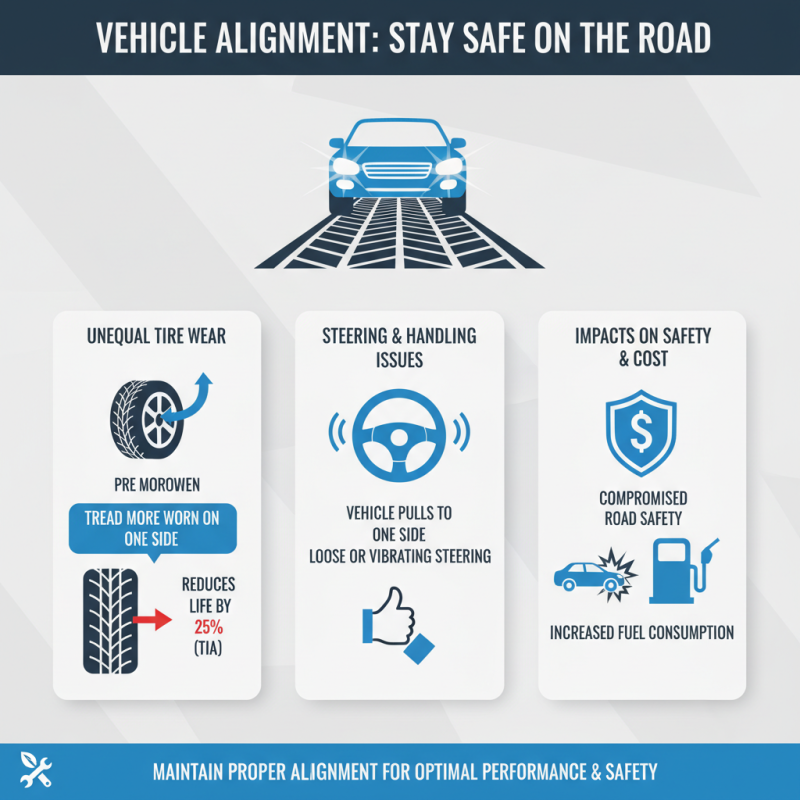
When it comes to vehicle maintenance, understanding the common signs of misalignment or imbalance is crucial for ensuring a smooth and safe driving experience. One of the most noticeable indications of alignment issues is uneven tire wear. According to the Tire Industry Association, improperly aligned wheels can result in a 25% reduction in tire life. Drivers may notice that the tread on one side of the tire is more worn than the other, which not only necessitates premature tire replacement but can also compromise safety on the road.
Another telltale sign of misalignment is the vehicle pulling to one side while driving. A study by the National Highway Traffic Safety Administration shows that 38% of all accidents are related to vehicle handling issues, which can stem from improper alignment. This pulling sensation can lead to constant corrections by the driver, causing fatigue and increasing the likelihood of accidents. In addition, a steering wheel that is off-center, even when going straight, signals an imbalance that can affect overall vehicle control, further underscoring the importance of addressing alignment and balancing promptly to maintain both vehicle performance and safety.
Step-by-Step Guide to Checking Your Car's Alignment and Balance
When it comes to ensuring your vehicle's optimal performance, checking its alignment and balance is crucial. This step-by-step guide will help you assess both, allowing you to enhance your driving experience and prolong the life of your tires. Start by parking your car on a level surface and inspecting the tire pressure; proper inflation is essential for accurate alignment readings. Next, visually check the tires for uneven wear patterns, as this can indicate alignment issues.
Once you've completed your preliminary checks, it's time to move on to measuring the alignment. Use a measuring tape to measure the distance between the front and rear tires on each side. A difference in these measurements can signal an alignment problem. Additionally, examine how the vehicle drives. If it pulls to one side or the steering wheel is off-center, those are signs that you need to make adjustments.
For tire balancing, lift the vehicle and spin each tire to watch for wobbling, which indicates an imbalance. A quick tip is to keep track of your balance weights; if they fall off during use, it may lead to uneven tire wear or handling issues down the line. Regular inspections and adjustments not only enhance safety but also improve fuel efficiency, making it an essential part of vehicle maintenance.
10 Essential Tips for Car Alignment and Balancing
This chart illustrates the importance of proper car alignment and balancing based on various factors affecting vehicle performance. Each category represents a crucial aspect that can be enhanced through regular maintenance.
Tips for Maintaining Proper Tire Pressure and Alignment Over Time
Maintaining proper tire pressure is crucial for ensuring optimal car alignment and balancing.
Under-inflated tires can lead to uneven wear, affecting not only the tires but also the overall handling of the vehicle. It’s essential to
regularly check tire pressure using a reliable gauge, especially when the seasons change. Temperature fluctuations can influence tire
pressure, so a good practice is to inspect it monthly. Properly inflated tires improve fuel efficiency and can enhance safety by providing
better traction.
In addition to tire pressure, regular alignment checks are necessary to prolong the life of your tires.
Misalignment can occur due to everyday driving conditions, such as hitting potholes or
driving over curbs. Signs of misalignment include uneven tire wear, a pulling sensation while driving, or a crooked steering
wheel when driving straight. Scheduling routine checks with a mechanic can help address these issues promptly, preventing further
damage and ensuring a smooth, safe driving experience. By being proactive about tire maintenance and alignment, drivers can not
only save money in the long run but also improve their overall driving safety.
When to Seek Professional Help for Car Alignment and Balancing Issues
When it comes to car alignment and balancing, many drivers may wonder whether they can handle these issues themselves or if they should seek professional assistance. The key signs that you might need to consult a mechanic include uneven tire wear, the vehicle pulling to one side, or a steering wheel that is off-center when driving straight. If you start noticing these symptoms, it’s essential to take action quickly, as neglecting them can lead to more significant problems and increased repair costs.
To maintain proper car alignment and balancing, consider implementing some essential tips. Regularly inspecting tire pressure and tread depth can significantly prolong the life of your tires and ensure even wear. Additionally, schedule a professional alignment check at least once a year or every 6,000 miles, especially after hitting a significant pothole or curb. This routine maintenance can help prevent misalignment and improve your vehicle's handling.
Another important tip is to keep your suspension components in check. Worn-out shocks or struts can lead to misalignment, making it vital to replace them when needed. Remember that while DIY checks are beneficial, complex issues often require the expertise of a professional mechanic who can provide a thorough diagnosis and precise adjustments. Taking these steps can save you time and money in the long run while ensuring your vehicle operates smoothly and safely.