Leave Your Message
Choosing the best Automatic Scissor Jack in 2026 requires more than comparing lifting speed and price. A reliable model must match your vehicle’s weight, lift points, ground conditions, and emergency needs. A compact jack may fit neatly in the trunk, yet it can feel unstable on loose gravel. That detail matters.
Real-world experience shows how quickly small problems become serious. A short power cable may not reach the battery. A weak motor may struggle in cold weather. A bright work light can help under a dark wheel arch, but it cannot replace a stable base. Check the rated capacity, lifting range, saddle shape, fuse protection, and manual override. The owner’s manual remains essential.
Look for clear manufacturer specifications, responsive warranty support, and independent product testing where available. Avoid trusting dramatic advertising alone. An Automatic Scissor Jack should raise the vehicle smoothly, stop at its limit, and remain steady during operation. It should also include practical accessories, such as battery clamps, a wired controller, and storage protection.
No single model suits every driver. That is easy to forget. I once valued faster lifting and overlooked cable length, which made setup awkward beside a roadside shoulder. A careful buying decision considers routine maintenance, replacement parts, noise, portability, and actual vehicle compatibility. This guide explains how to compare those details and choose a jack that offers dependable assistance without creating false confidence. A jack supports the vehicle; it should never replace proper wheel chocks, a level surface, or safe working habits.
An automatic scissor jack is a powered lifting tool for changing a vehicle’s wheel with less physical effort. Unlike a manual jack, it uses an electric motor to turn a threaded screw. That screw pulls the crossed metal arms together, raising the saddle under the vehicle.
Less effort, not magic.
Most units connect to a vehicle’s 12-volt socket or battery terminals. A wired controller usually operates the lift and descent functions. Some designs include a built-in light, emergency crank, or overload protection. These features can help beside a dark roadside, but they do not replace careful positioning. If the motor sounds strained, stop immediately. A damaged screw or weak connection may cause uneven lifting.
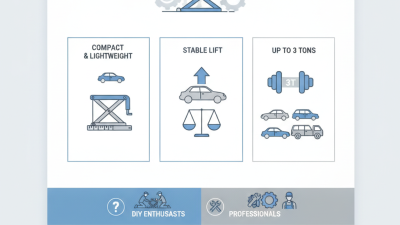
Before choosing one, check its rated capacity and maximum lift height. The saddle must match the vehicle’s recommended lifting point. A wide steel base feels more stable on firm ground. A compact design fits easily in a trunk, yet very small models may sacrifice strength. That trade-off is easy to overlook.
Use the jack only on level, solid ground. Engage the parking brake and keep people away from the vehicle. Never place any part of your body beneath a vehicle supported only by a jack. Automatic does not mean unattended. Motor heat, low battery voltage, and loose cables can interrupt operation. In real use, a quiet motor and smooth movement often reveal better construction than a flashy control panel. Even then, inspection matters. No jack is perfect.
| Data Dimension | Typical Specification or Value | What It Means for Selection and Use | Recommended Check |
|---|---|---|---|
| Definition | Motor-powered vehicle lifting tool | An automatic scissor jack uses an electric motor and a screw mechanism to raise or lower a vehicle with less manual effort than a traditional hand-operated jack. | Confirm that the product is designed for your vehicle type and lifting points. |
| Basic Working Principle | Electric motor turns a threaded screw | The rotating screw moves the scissor arms apart or together, converting rotary motion into vertical lifting or lowering motion. | Inspect the screw, gears, and pivot joints for smooth movement before use. |
| Common Power Source | 12-volt vehicle accessory socket | Most portable automatic jacks are powered by a vehicle’s 12 V electrical system through an accessory outlet or battery connection. | Check the cable length, plug type, fuse rating, and vehicle outlet capacity. |
| Typical Rated Capacity | Approximately 1.5–3.0 metric tons | Capacity must exceed the vehicle’s actual lifting requirement. The jack normally lifts only one corner or one axle, not the entire vehicle weight. | Use the vehicle’s gross weight and the jack manufacturer’s rated capacity as references. |
| Typical Lifting Range | Approximately 105–450 mm | A wider range improves compatibility with sedans, hatchbacks, crossovers, and some light-duty vehicles, but the exact range varies by design. | Compare the minimum and maximum jack heights with the vehicle’s ground clearance and approved lifting point. |
| Average Lifting Speed | Approximately 1–3 minutes for a normal wheel change | Actual speed depends on vehicle load, starting height, motor output, screw lubrication, battery condition, and temperature. | Prioritize rated capacity and stability over speed alone. |
| Control Method | Wired remote control; some models include wireless control | A remote control allows the operator to start, stop, raise, or lower the jack while standing away from the vehicle. | Choose controls with clearly marked raise, lower, and stop functions. |
| Emergency Manual Operation | Manual crank or auxiliary lowering function | A backup mechanism can help lower the vehicle if the motor, cable, fuse, or vehicle battery stops working. | Verify that the emergency procedure is supplied and practical before carrying the jack. |
| Safety Features | Overload protection, limit control, anti-slip saddle, and automatic stop | These features reduce the risk of overloading, excessive travel, saddle slippage, or motor damage. | Do not rely on safety features as a substitute for a level surface and correct lifting points. |
| Stability Requirements | Hard, level, and stable ground | Scissor jacks have a relatively narrow support footprint and may become unstable on soft soil, gravel, steep slopes, or uneven surfaces. | Park on firm ground, engage the parking brake, and use wheel chocks. |
| Vehicle Compatibility | Passenger cars and selected light-duty vehicles | Compatibility depends on lifting capacity, minimum height, maximum height, saddle shape, and the position of the vehicle’s reinforced lifting points. | Check the vehicle owner’s manual before selecting or positioning the jack. |
| Contact Saddle | Steel saddle; rubber pad may be included | A suitable saddle protects the vehicle’s lifting point and helps reduce slipping or paint damage. | Use a correctly shaped contact pad and avoid lifting from suspension or body panels not approved by the vehicle maker. |
| Vehicle Battery Requirement | Healthy 12 V battery and adequate current supply | Low voltage or a damaged accessory socket can prevent the motor from reaching its rated performance. | Keep the engine-off operating time short and avoid draining the battery during roadside repairs. |
| Portability | Typically about 5–15 kg, depending on capacity and accessories | Lower weight improves storage and transport, while heavier construction may provide greater capacity or stability. | Confirm that the case fits the vehicle’s storage compartment and includes the necessary cables. |
| Storage Protection | Protective carrying case recommended | A case helps protect the motor, controls, cable, screw, and accessories from moisture, dirt, and impact. | Store the jack dry and secure it so it cannot move during driving. |
| Weather and Temperature | Performance may decrease in rain, dust, or extreme temperatures | Moisture and contamination can affect electrical connectors, gears, and the threaded lifting mechanism. | Follow the operating temperature and weather limits stated in the product manual. |
| Maintenance | Periodic cleaning, inspection, and screw lubrication | Removing dirt and maintaining the threaded mechanism can help reduce friction and premature wear. | Use only the lubricant recommended by the manufacturer and inspect for bent arms or damaged threads. |
| Primary Limitation | For lifting only, not for long-term support | A jack is intended to raise a vehicle temporarily. It should not support a person underneath the vehicle during repair work. | After lifting, place properly rated jack stands before working beneath the vehicle. |
| Best Selection Priority | Capacity + Compatibility + Stability | The best automatic scissor jack is not necessarily the fastest. Correct capacity, lifting range, reliable controls, and stable placement are more important. | Compare the product specifications with the vehicle manual before purchase. |
Safety note: An automatic scissor jack is intended for emergency wheel changes and short-duration lifting. Never exceed its rated capacity, never work beneath a vehicle supported only by a jack, and always follow the vehicle and jack manufacturer’s instructions.