How to Choose the Right Inground Scissor Lift for Your Garage Needs?
Choosing the right Inground Scissor Lift for your garage is crucial. It can enhance your workspace significantly. With various options available, it’s easy to feel overwhelmed.
Consider the size of your garage. Space is often limited, making this decision critical. An Inground Scissor Lift requires adequate installation area. Pay attention to the lift's weight capacity. Ensure it meets your vehicle needs.
Moreover, think about your future requirements. Will you upgrade to larger vehicles? This aspect can affect your choice. Don't overlook maintenance costs either. Neglecting these details can lead to unexpected expenses. A well-thought-out decision will enhance your garage efficiency.
Factors to Consider When Choosing an Inground Scissor Lift for Garages
When choosing an inground scissor lift for your garage, consider several key factors. Start with the lift’s weight capacity. Most models can handle between 6,000 to 10,000 pounds. Evaluate your specific needs based on the vehicles you intend to service. A heavier vehicle requires a lift with greater capacity.
Another critical factor is the lift’s platform size. A larger platform allows for better stability and workspace. A minimum width of 30 inches is common. Yet, some users may find this inadequate for larger vehicles. Consult industry reports indicating that inadequate platform space can lead to safety risks, with nearly 15% of accidents attributed to instability.
Installation and maintenance are vital as well. Many users underestimate the complexity of installation. Depending on your garage layout, it can take hours to set up correctly. Annual maintenance checks are necessary. Reports suggest that 25% of inground lifts require major repairs due to neglect. Reflect on your commitment to upkeep. A poorly maintained lift can be more hazardous than helpful.
Understanding Load Capacity and Weight Distribution in Scissor Lifts
When selecting the right inground scissor lift, understanding load capacity is vital. Load capacity varies significantly among different models. Most scissor lifts range from 2,500 to 10,000 pounds. This means some lifts can handle heavier vehicles while others focus on lighter models. It is crucial to assess your typical vehicle weights to avoid overloading. For instance, a standard sedan weighs around 3,000 pounds, while a truck may weigh up to 7,000 pounds.
Weight distribution is another critical factor. An uneven load can lead to instability. Ensure the load is centered while using the lift. Reports suggest that nearly 30% of accidents result from improper weight distribution. Always measure the dimensions of your garage. A lift that fits well can distribute weight more evenly. Check for specifications that detail maximum load angles and height, as they impact performance. Not all lifts are created equal. Even minor miscalculations can have serious consequences.
In addition, consider the intended use. If the lift will frequently be used for different types of vehicles, having a higher capacity may be wise. However, many users underestimate their actual needs. A lift with a higher load capacity often costs more. Balancing cost with functionality is essential for long-term satisfaction.
Hydraulic vs. Electric Scissor Lifts: Which is Better for Garage Use?
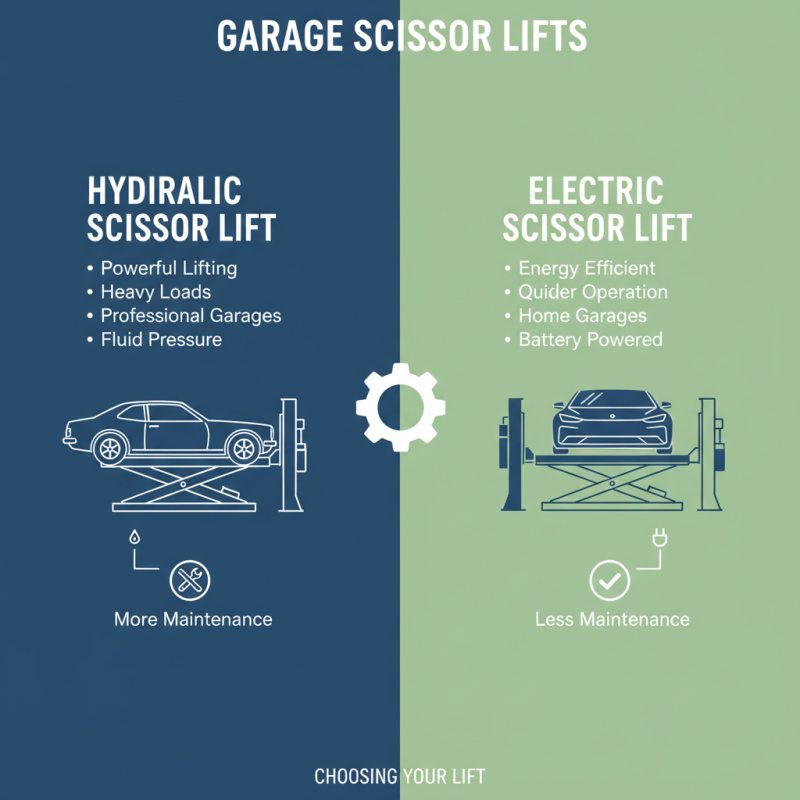
When choosing the right scissor lift for your garage, the type matters. Hydraulic and electric lifts each have unique features. Hydraulic scissor lifts offer powerful lifting with fluid pressure. They can handle heavy loads, making them ideal for professional settings. However, they require regular maintenance to avoid leaks and operational failures.
On the other hand, electric scissor lifts are quieter and have easier controls. They are great for home garages due to their convenience. Plus, they tend to require less maintenance. Still, their lifting capacity may depend on your specific needs. Some users find them less powerful for larger vehicles.
The selection process can be tricky. Think about your typical projects. Are you lifting heavy machinery or working on vehicles? This decision will guide you. Remember to consider your budget too. A more expensive lift often equates to durability, but you may reevaluate your actual needs.
The Importance of Safety Features in Inground Scissor Lifts
When considering an inground scissor lift, safety features are paramount. A reliable scissor lift should include robust safety mechanisms. Look for features like emergency stop buttons and overload protection. These elements prevent accidents and ensure peace of mind while working.
Another crucial aspect is stability. The lift should have a solid base that prevents tipping. Check for anti-slip surfaces and proper weight distribution. It's essential to ensure that ramps and the surrounding area are clear and well-marked. Poor planning can lead to dangerous situations.
Regular maintenance is often overlooked but vital. Even the best lifts need routine checks. Inspect hoses, cables, and control systems for wear. Neglecting maintenance can cause accidents. Reflect on how you can improve safety in your garage. Prioritize features that might seem minor but enhance overall security. These simple steps can make a significant difference.
Maintenance and Installation Costs of Inground Scissor Lifts: A Breakdown
When considering an inground scissor lift, installation and maintenance costs matter. Installation can be complex. It may require specialized tools and expertise. Often, hiring a professional is the safest choice. Costs can range significantly based on your garage's specifications. A deeper pit for the lift might increase expenses.
Maintenance is a crucial aspect, too. Regular check-ups are necessary for optimal performance. These can include hydraulic fluid checks and structural inspections. Budgeting for parts is wise; wear and tear can lead to unexpected costs. Sometimes, owners neglect maintenance, causing issues that require expensive repairs later. A proactive approach is often more cost-effective.
Before making a choice, evaluate your long-term needs. Think about how often you will use the lift and the types of vehicles you'll service. Scissor lifts can be a significant investment, so weighing all costs is important. Failing to do so may lead to regrets down the road. Balancing initial costs with future maintenance offers a clearer picture of your investment.
How to Choose the Right Inground Scissor Lift for Your Garage Needs?
| Lift Type |
Weight Capacity |
Platform Size |
Maintenance Cost (Annual) |
Installation Cost |
| Standard Inground |
8,000 lbs |
4 ft x 12 ft |
$300 |
$2,000 |
| Heavy Duty Inground |
12,000 lbs |
5 ft x 14 ft |
$400 |
$2,500 |
| Compact Inground |
6,000 lbs |
3 ft x 10 ft |
$250 |
$1,500 |
| Scissor Lift with Jacks |
10,000 lbs |
4 ft x 12 ft |
$350 |
$2,200 |