How to Choose the Best Single Post Car Lift for Your Garage?
Choosing the right Single Post Car Lift for your garage is crucial. It can enhance your workspace and improve your vehicle maintenance routine. A Single Post Car Lift is a popular option for many car enthusiasts. It offers a compact design without compromising functionality. Space is often limited in garages, making this lift an efficient choice.
Before purchasing, consider your specific needs and the type of vehicles you plan to lift. Some models are designed for lighter cars, while others can handle heavier vehicles. Researching different models can be overwhelming, and you might feel uncertain about the right fit. It's necessary to reflect on what features matter most to you.
The installation process shouldn't be overlooked. Improper setup could lead to accidents or damage. Think about the safety features and customer reviews. Each detail plays a role in your decision. A Single Post Car Lift can be a game-changer. However, a thoughtful approach is essential to ensure you make the best choice for your garage.
Understanding the Types of Single Post Car Lifts Available
When choosing a single post car lift, it's essential to understand the types available. There are several designs tailored to different garage needs. One popular option is the adjustable lift. This type can accommodate various vehicle heights and sizes. It often features a hydraulic system, making it easier to raise and lower cars. However, users sometimes find adjusting the height cumbersome.
Another common variant is the fixed-height lift. This model is simple and sturdy. It's built for specific vehicle heights, which can limit versatility. Yet, it provides stability, which some users prefer. The installation process can also be a challenge. Ensure your ceiling height is adequate before opting for this option.
Finally, consider portable single post lifts. These can be moved easily, offering flexibility. They're great for smaller spaces where a permanent lift isn’t feasible. But portability might lead to less stability. Users should take extra care when using them. Reflect on your garage's setup. Choosing the right lift requires careful consideration of your garage space and vehicle needs.
Evaluating the Weight Capacity Requirements for Your Vehicle
When selecting a single post car lift, weight capacity is crucial. Each vehicle has a specific weight that can vary significantly. Ensure you know your car's weight before choosing a lift. This way, you’ll guarantee safety and functionality.
Tip: Check your vehicle’s manual for detailed weight specifications. Remember, overloading the lift can lead to accidents. It's vital to follow the weight limits provided by the manufacturer of the lift. Ignoring this can lead to serious consequences.
Consider the heaviest vehicle you plan to lift. A larger weight capacity might provide peace of mind. However, if you often lift lighter cars, you don't need a model with excessive capacity. There's a balance to find, but unfortunately, many overlook this.
Tip: Explore features like adjustable arms. They can accommodate different vehicle frames. This is essential for versatile use. Reflect on your garage space as well. Not all lifts fit every garage. Make sure you have enough height and space for your lift and vehicle.
How to Choose the Best Single Post Car Lift for Your Garage? - Evaluating the Weight Capacity Requirements for Your Vehicle
| Vehicle Type |
Weight (lbs) |
Lift Capacity Needed (lbs) |
Recommended Lift Height (ft) |
| Sedan |
3,200 |
4,000 |
4.5 |
| SUV |
4,500 |
5,500 |
5.0 |
| Truck |
6,500 |
7,500 |
5.5 |
| Sports Car |
3,000 |
4,000 |
4.0 |
| Van |
5,500 |
6,500 |
5.0 |
Key Features to Look for in a Single Post Car Lift
When choosing a single post car lift, several key features are essential. Look for adjustable height options. This adds versatility. A sturdy base ensures stability. Check the weight capacity too. It should match your vehicle's needs. A lift that can't support your car is useless.
Safety features are also vital. Look for built-in safety locks. These prevent accidents while working under the car. Non-slip surfaces on the lift’s platform enhance security further. Remember power sources as well. A lift that operates quietly can be a plus in a small garage.
Consider how much space you have. Some lifts require more room than others. If your garage is tight, find one that fits comfortably. Also, think about ease of use. Complicated setups can be frustrating. A simple user manual is helpful. Planning this investment requires careful thought. Don't rush into a decision; it’s worth the time.
Assessing Installation and Space Considerations for Your Garage
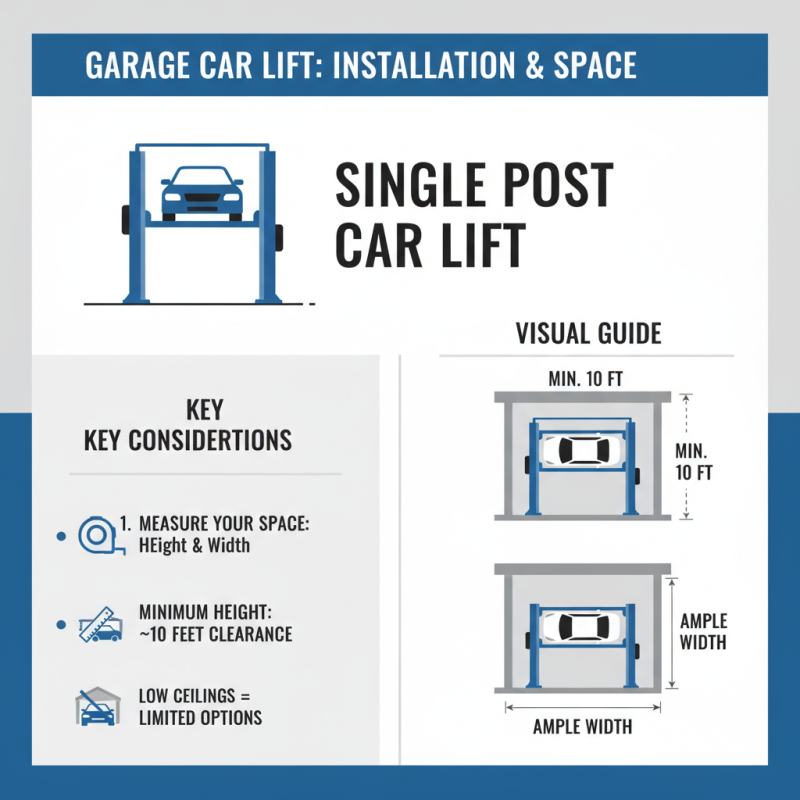
When considering a single post car lift, proper installation and space management are key factors. Start by measuring your garage's height and width. This ensures the lift will fit comfortably. Most single post lifts require a minimum clearance of around 10 feet. If your garage has low ceilings, you may struggle to find a suitable option.
Assess the lift's footprint as well. Some models need more floor space than others. Positioning is also vital; ensure there’s enough room for doors to open widely and for you to move around. Consider if you'll be working on larger vehicles, as they require more space. Visualizing the setup can prevent large headaches later.
Try to think about your workflow as well. Where will tools and equipment go? A clutter-free environment is safer and more efficient. If your garage isn't organized, a lift might exacerbate the chaos instead of easing it. Reflecting on these aspects early saves time and frustration, paving the way for a smoother installation process.
Comparing Budget Options: Costs and Value of Different Models
When selecting a single post car lift for your garage, budget plays a crucial role. Industry reports indicate that the average cost of such lifts ranges from $1,000 to $3,000. However, the value you receive varies significantly among models. For many users, finding a solid mid-range option can strike a balance between price and functionality.
Cheap lifts might save you money upfront, but hidden costs often emerge. Typically, lower-priced models may lack crucial safety features or durability. Reports show that the lifespan of budget lifts often falls short compared to more expensive alternatives. Some users have experienced mechanical failures within a year. Investing slightly more upfront could enhance long-term safety and reduce costs associated with repairs.
Another point to consider is assembly and installation. Some budget lifts require more time and effort to set up. Complicated instructions can lead to frustration. Industry professionals often recommend choosing models that prioritize ease of use. This might add to the initial cost but could save you a great deal of time and hassle later on. Ultimately, a cautious approach to budgeting can help ensure that your choice meets not just your wallet but also your needs for safety and functionality.