China Top Scissor Car Lift Types for Efficient Vehicle Maintenance?
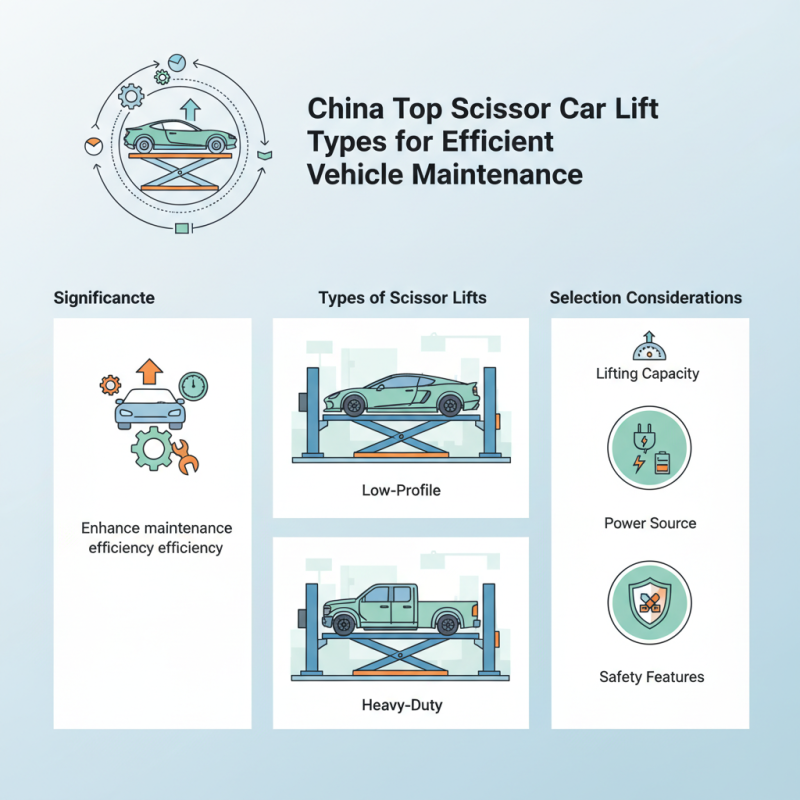
In the realm of vehicle maintenance, the significance of selecting the right Scissor Car Lift cannot be overstated. Renowned industry expert John Mitchell, a veteran in automotive service equipment, emphasizes, “The right lift can dramatically enhance maintenance efficiency.” This statement reinforces the value of understanding the various types of scissor car lifts available.
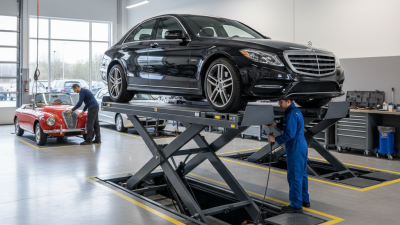
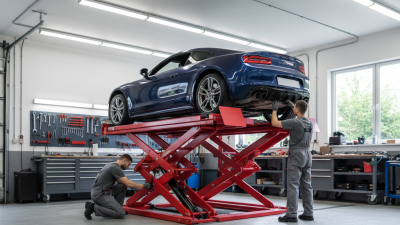
Scissor car lifts are designed to offer maximum stability and space efficiency. These units are ideal for cramped workshops as they require minimal floor space. Different types are available, each tailored to specific needs. For instance, low-profile lifts cater to sports cars, while heavy-duty options support trucks and larger vehicles.
Selecting a scissor car lift involves careful consideration. Not all lifts are equal. Depending on your maintenance needs, some might offer better features than others. Potential buyers should weigh factors like lifting capacity, power source, and safety features. Reflecting on these aspects can lead to a more informed choice, ensuring that your workshop operates at peak efficiency.
Types of Scissor Car Lifts Used in China for Vehicle Maintenance
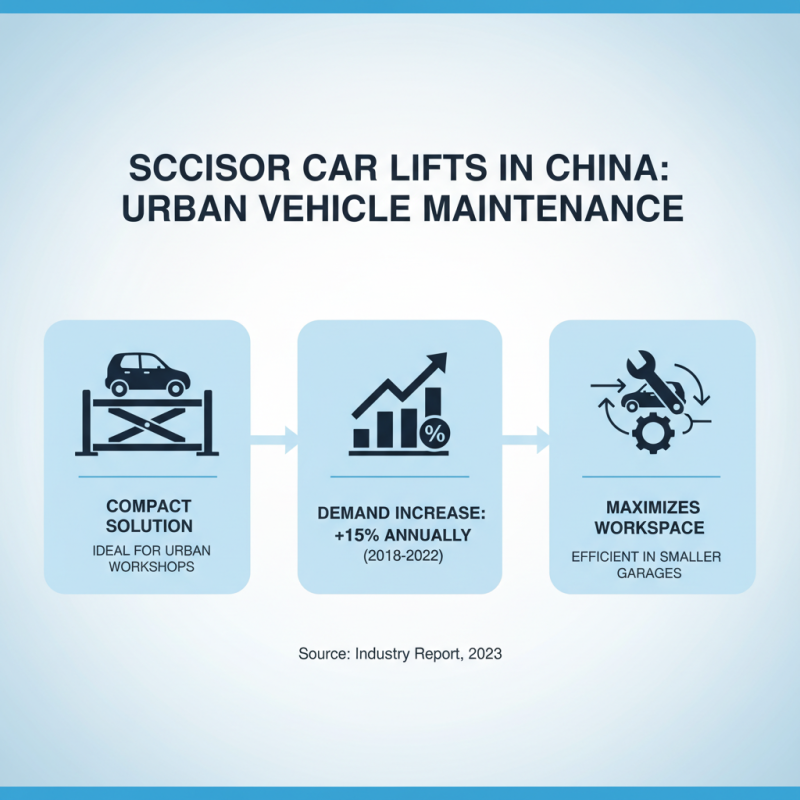
In China, scissor car lifts have gained popularity for vehicle maintenance. These lifts offer a compact solution, especially in urban workshops. A recent industry report shows that the demand for scissor lifts increased by 15% annually from 2018 to 2022. This surge highlights their efficiency in maximizing workspace in smaller garages.
Various types of scissor car lifts are prevalent in China. For instance, portable scissor lifts are favored for their ease of mobility and flexibility. Many garages utilize them for quick tasks that require minimal setup time. On the other hand, heavy-duty models support larger vehicles, accommodating weights up to 10,000 kg. However, maintenance practices around these lifts often fall short of ideal standards. Some users overlook the importance of regular inspections, which can lead to operational failures.
Technical limitations also exist. Some scissor lifts struggle with uneven surfaces, affecting stability. Reports indicate that at least 20% of lifting incidents stem from improper loading. This emphasizes the need for user training and attention to operational guidelines. With the rising standards in the automotive sector, addressing these shortcomings will enhance lift efficiency and safety.
Key Features of Hydraulic Scissor Lifts in Automotive Repair
Hydraulic scissor lifts play a crucial role in automotive repair. They provide stable lifting and excellent accessibility to various vehicle components. According to industry data, a well-implemented scissor lift can improve workshop efficiency by 20%. These lifts allow technicians to work efficiently without straining their bodies. This design minimizes the risk of workplace injuries and enhances productivity.
Key features of hydraulic scissor lifts include adjustable height ranges and load capacity. A standard lift can typically handle up to 3 tons. Additionally, models with wider platforms enhance stability and safety during use. Some units offer platforms that can extend to 1,200 mm wide, accommodating larger vehicles. These features also reduce overhead costs. However, it's essential to consider the required maintenance. Regular checks on hydraulic fluid and seals are necessary for optimal performance.
While many workshops rely heavily on hydraulic scissor lifts, not all models are created equal. Poor quality lifts can pose safety risks. Reports indicate that improper maintenance can lead to lift failures, potentially causing significant accidents. Training staff on proper use protocols is vital. Continuous education can prevent mishaps and ensure a safe working environment. This ongoing learning helps technicians identify potential issues early, fostering a proactive maintenance culture.
Market Trends: Growth of Scissor Lift Adoption in China’s Auto Sector
The adoption of scissor lifts in China's automotive sector is on the rise. These lifts provide efficient access to vehicle undercarriages and engines. They are popular in repair shops due to their space-saving design. More technicians are recognizing their value for safety and reliability.
When investing in a scissor lift, consider the weight capacity. Different vehicles require different support. Ensure the lift can handle the maximum weight of cars you will service. Also, evaluate the lift's height range. A lift that can elevate vehicles high enough improves accessibility.
Tip: Prioritize models with safety features. Look for automatic safety locks that prevent accidental descent. Regular maintenance of the lift is essential, too. Ensure it is checked and serviced periodically. This enhances the lifespan of the equipment and ensures a safe working environment.
Scissor lifts are not without their flaws. Some models may require more space than anticipated. Also, improper installation can lead to safety hazards. Careful attention during setup and regular assessments can mitigate these risks. Understanding these details can optimize their use in your workshop.
Safety Standards and Regulations for Scissor Car Lifts in Workshops
When it comes to scissor car lifts, safety should always be a priority. In workshops, following safety standards is crucial for protecting both staff and vehicles. Each lift should meet the regulations set by authoritative bodies. This includes proper installation, regular maintenance, and operator training. A well-maintained lift reduces risks and increases efficiency.
It's vital to ensure that safety features are regularly tested. Emergency stops, overload protection, and locking mechanisms can help prevent accidents. Always check for wear and tear on hydraulic systems. Operators should be trained in recognizing potential hazards. Safety audits can bring awareness to overlooked areas.
Tips: Always use lifts within their weight limits. Ensure the workshop area is well-lit. Never leave a vehicle unattended on a lift. Regular inspection logs can enhance accountability and safety. Implementing these practices helps create a safer working environment.
Performance Metrics: Efficiency and Load Capacity of Popular Scissor Lifts
When it comes to efficient vehicle maintenance, scissor lifts are essential tools. They come in various types, each designed to meet different needs. These lifts are particularly valued for their compact design and stability during operation. Performance metrics, such as efficiency and load capacity, help in selecting the right type.
Choosing the right scissor lift involves understanding its efficiency. Look for models that offer quick raise and lower times. Features like hydraulic systems enhance efficiency significantly. Many lifts can handle substantial weights, with some models supporting up to 10,000 pounds. This capability is crucial in commercial settings where heavy vehicles are serviced.
**Tip:** Always check the lift's maintenance schedule to ensure longevity. Regular servicing can prevent unexpected breakdowns.
Load capacity must be considered carefully. A lift with insufficient capacity could pose safety risks and lead to costly repairs. Ensure the product specifications match your needs. Overloading a lift is a common mistake that should be avoided.
**Tip:** Consider an annual inspection. This proactive measure can enhance safety and efficiency.
Evaluating these metrics helps in making an informed choice. Performance varies across models, so test them if possible. Making the right selection can lead to safer work environments and increased productivity.